15 июля 2026 г. · The Ceylon Days Team · 5 мин чтения
Beach-Hopping Sri Lanka’s West and South Coasts: Where to Stay and For How Long
From Bentota’s calm resort waters to Mirissa’s whales and Tangalle’s empty sands, the west and south coasts are a string of very different beaches. A local’s guide to picking your stretch — and how many nights each one deserves.
На этой странице
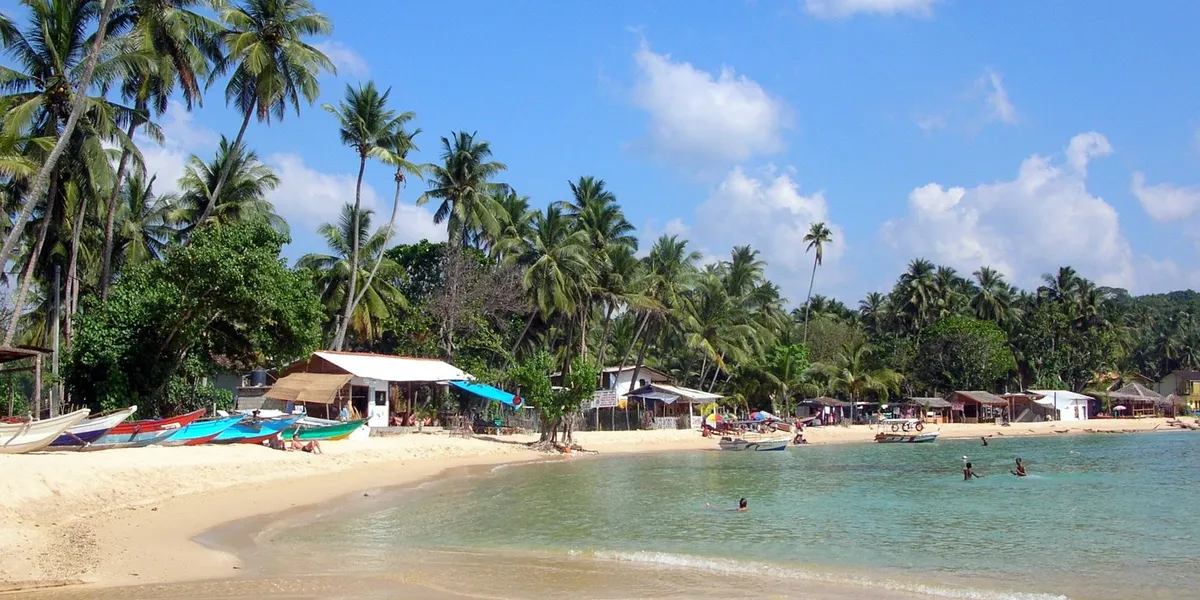
Sri Lanka's southwestern seaboard is really one long beach interrupted by headlands, fishing harbours and a seventeenth-century fort — but each stretch has its own personality, and choosing the wrong one for your style of trip is the most common beach mistake we see. Honeymooners end up in surf-hostel towns; surfers end up in resort enclaves; families end up on beaches with rips where nobody should swim.
First, the season, because it decides everything: the southwest monsoon soaks this coast from roughly May to September, so the west and south run at their sparkling best from December to March — calm seas, blue skies, and every beach town fully awake. (In the May–Sep months the island simply flips: the east coast around Trincomalee and Arugam Bay takes over, as we explain in our best time to visit guide.) Here is the coast, north to south, as we would brief a friend.
Bentota: resorts, watersports and the Madu River
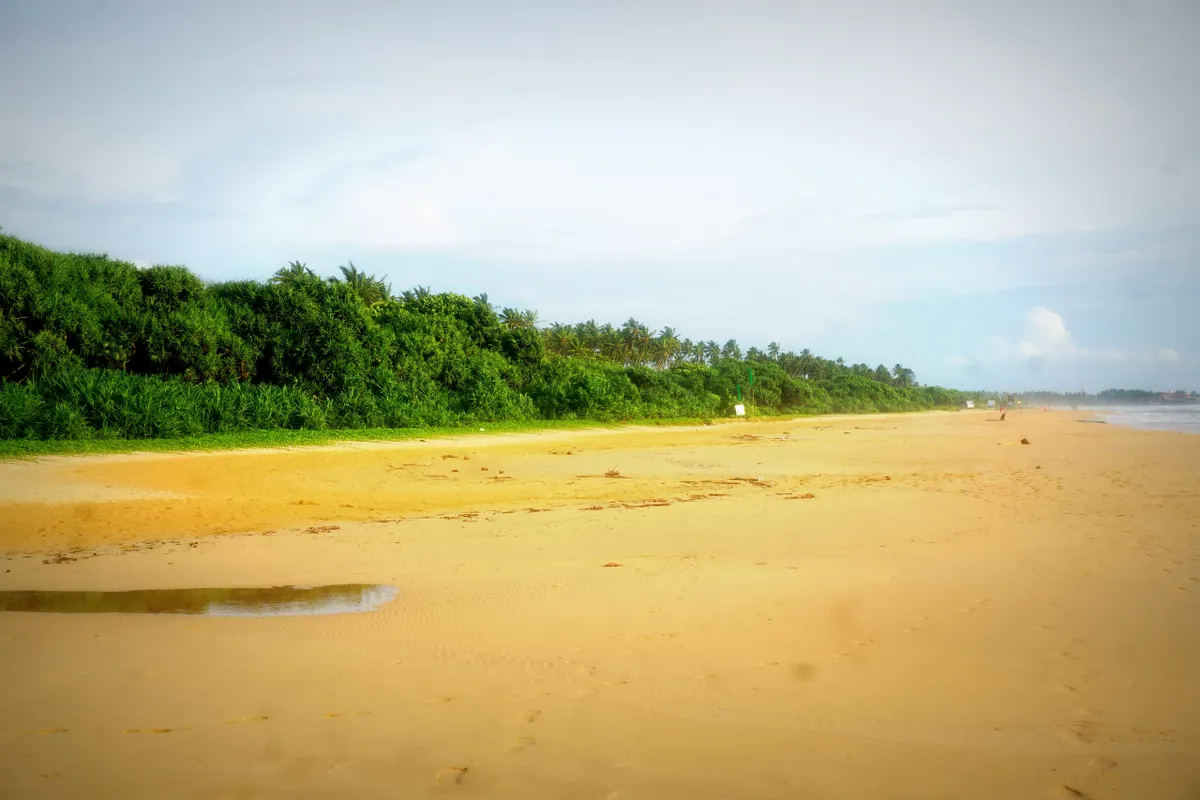
An hour and a half south of Colombo, Bentota is the coast's classic resort chapter — a long golden spit between river and ocean, lined with the island's most established beach hotels, including some elegant Geoffrey Bawa-designed properties. The river mouth makes it the watersports capital: jet skis, banana boats, windsurfing and calm-water swimming on the lagoon side even when the ocean has a shore break.
The essential excursion is a Madu River boat safari, twenty minutes south — hours of gliding through mangrove tunnels among monitor lizards, kingfishers and cinnamon islands. Bentota suits first-and-last nights, honeymooners who want polish, and families with young children. Two nights is right for most; it is a place to arrive and exhale rather than explore. En route south, surfy, snorkel-friendly Hikkaduwa — one of Sri Lanka's original beach towns — makes a nostalgic lunch stop, with turtles often grazing right off the beach.
Galle: the cultural anchor
Every south-coast trip should hinge on Galle — not for swimming (the town beaches are not the point) but because the Galle Fort, a UNESCO-listed Dutch colonial citadel, is the most atmospheric square kilometre on the coast. Rampart walls you can walk at sunset, streets of villas turned boutiques, cafés and jewellers, a working lighthouse, cricket on the green below the walls. Stay a night inside the fort if you can — it changes character completely once the day-trippers leave — or use it as a half-day stop between beaches. Either way, do not drive past it.
Unawatuna: the swimmer's bay
Ten minutes beyond Galle, Unawatuna curls around a reef-protected bay that is the area's most reliable swimming beach — calm, clear and family-friendly through the season when other beaches are dumping shore break. Behind the sand there is real life: rooftop restaurants, yoga shalas, the jungle-and-coast walk out to the pocket coves around Jungle Beach and the Japanese Peace Pagoda. It is more built-up than it was, but it earns its popularity. Two nights, and it also makes a sensible base for Galle itself.
Weligama and Mirissa: surf school and whale country
Twenty minutes on, the wide, sandy horseshoe of Weligama is the island's learner-surf capital — gentle, forgiving beach-break waves, surf schools every fifty metres, and board hire for pocket change. If you have ever wanted to stand up on a wave, this is the place the coast will teach you.
Next bay along, Mirissa is the south's headline act: a handsome crescent with the palm-topped Coconut Tree Hill at one end, a strip of toes-in-the-sand seafood restaurants that turn into the coast's best low-key nightlife after dark, and — from November to April — the departure point for blue whale watching, one of the world's great marine wildlife experiences. We have written a full Mirissa whale watching guide; the short version is that a calm-season morning here can put you alongside the largest animal that has ever lived. Give Mirissa two to three nights so a whale trip, a surf lesson and pure beach idleness all fit.
Tangalle: the quiet ending
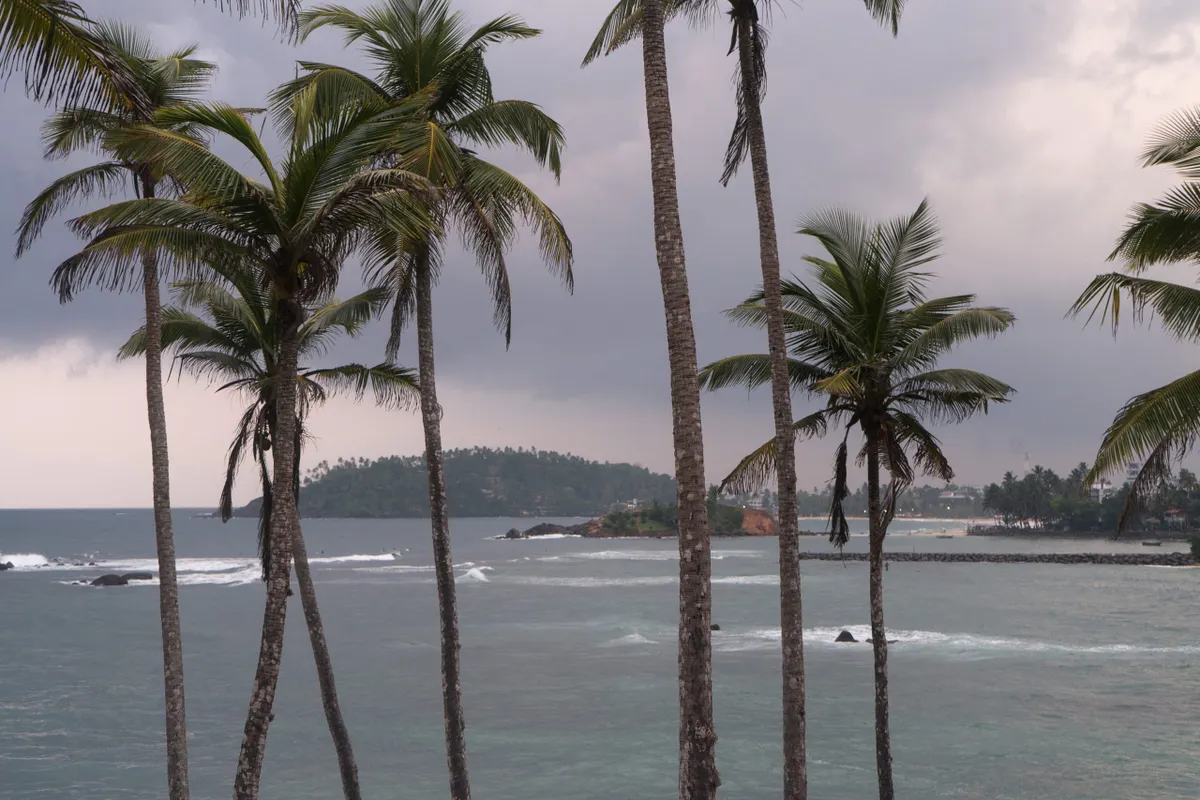
Another hour east, the crowds thin dramatically. Tangalle's long, wild beaches — Rekawa, Marakolliya, Goyambokka — are the coast at its emptiest and most cinematic: casuarina trees, rock pools, barely a deckchair. Swim carefully (currents are real on the open stretches; pick the protected coves), watch for nesting sea turtles at Rekawa on night tours, and expect boutique hideaways rather than towns. This is where you end a trip when you want the noise to stop — and it conveniently positions you ninety minutes from Yala if a safari comes next.
Base yourself, or keep moving?
Two workable philosophies:
- One base. Pick the town that matches your trip's personality — Bentota for resort ease, Unawatuna for swimming plus Galle, Mirissa for whales and evenings out, Tangalle for seclusion — and day-trip along the coast road. Nothing on this list is more than about two hours from anything else, and it means unpacking once.
- A two-stop hop. The pairing we book most is Mirissa or Unawatuna (2–3 nights) plus Tangalle or Bentota (2 nights) — one sociable base, one quiet one. With five or six coastal nights this gives you range without the every-morning repack.
What we would gently talk you out of is four bases in five nights. These are beaches; their whole argument is that you stop.
The coast is the natural finale to the classic island loop — culture, hills, safari, then salt water — which is exactly how our 10-day itinerary and Southern Beaches 5-day tour are built. If you would like help matching your travel style to the right stretch of sand, tell us what a perfect beach day looks like to you and we will place you on the coast accordingly.
Читать дальше