东部海岸
Trincomalee
亭可马里环抱着世界屈指可数的天然良港,是东海岸最值得深游的地方——这座故事悠长的港城,崖顶矗立着康奈斯瓦拉姆神庙,两侧铺展着乌普韦利与尼拉韦利的绵长白沙滩,海面外则是鸽子岛的珊瑚花园。更妙的是,这里的旅游季恰在五月至九月——正当西南海岸转入雨季之时。
Trincomalee has been prized for as long as ships have sailed the Indian Ocean. Its deep-water natural harbour — among the finest on the planet — drew Chola kings, Portuguese and Dutch fleets, and the British Royal Navy, all of whom left their mark on this old port town on Sri Lanka’s northeast coast. Today the gunboats are gone and Trinco, as everyone calls it, offers something rarer: a sweep of the island’s best beaches, superb snorkelling and reliable whale watching, all wrapped around a town with genuine history and a warm, unhurried Tamil-and-Sinhala character.
The timing is the masterstroke. When the southwest monsoon drenches the west and south coasts from May to September, the east basks in its dry season — flat turquoise seas, hot blue days and beaches at their sparkling best. If your dates fall in the European summer, Trincomalee isn’t the backup plan; it’s the answer.
Koneswaram and Fort Frederick
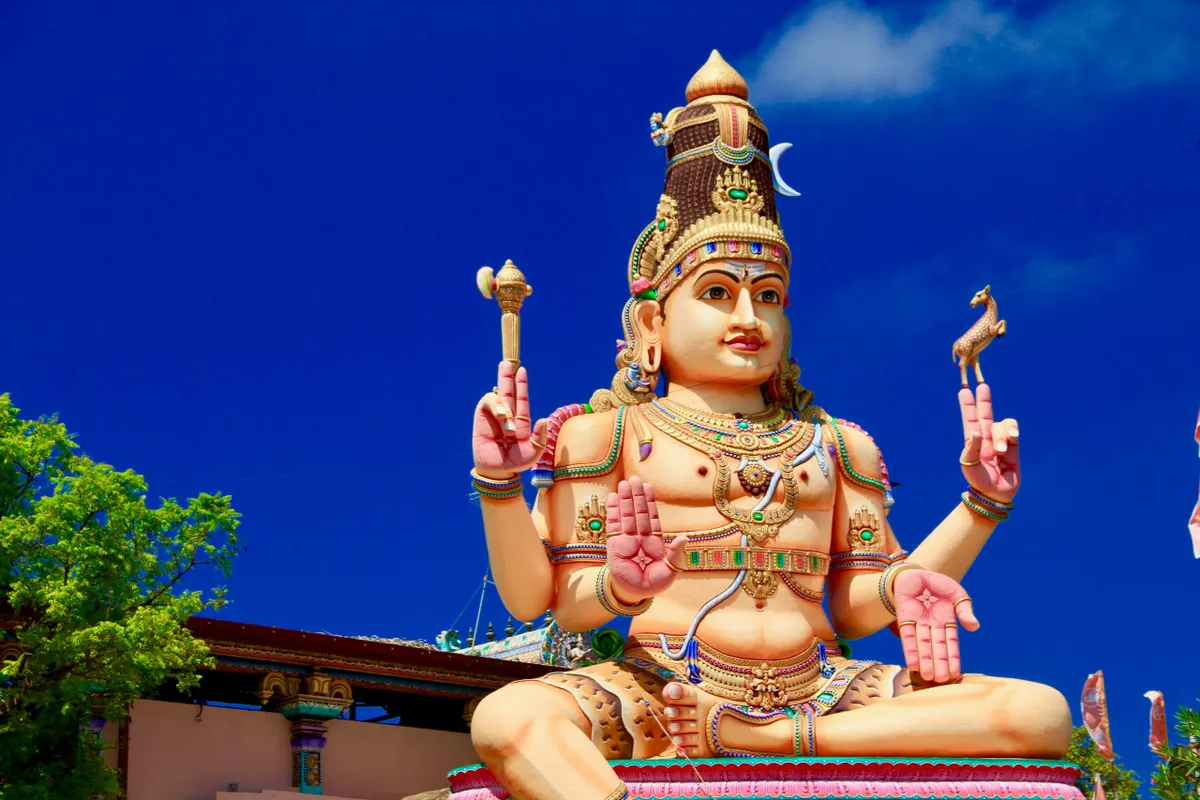
Trinco’s spiritual heart sits at the tip of a headland the whole town seems to lean toward. You approach through Fort Frederick — begun by the Portuguese in the 17th century and rebuilt by the Dutch and British — where wild deer graze between colonial-era barracks and shade trees. The road climbs to Swami Rock, a cliff plunging sheer to impossibly blue water, and there, at its very edge, stands Koneswaram Temple: one of the holiest Shiva shrines in Sri Lanka, its gopuram bright with painted gods, its courtyards loud with bells and temple music. Revered for well over a thousand years and celebrated in Tamil devotional poetry, the medieval temple was destroyed by the Portuguese and rebuilt in the 20th century — and the clifftop setting remains among the most dramatic of any temple in Asia. Look over the railings at Lover’s Leap and you may spot sea turtles riding the swell far below; in season, even blue whales pass within sight of the rock.
Beaches: Uppuveli and Nilaveli
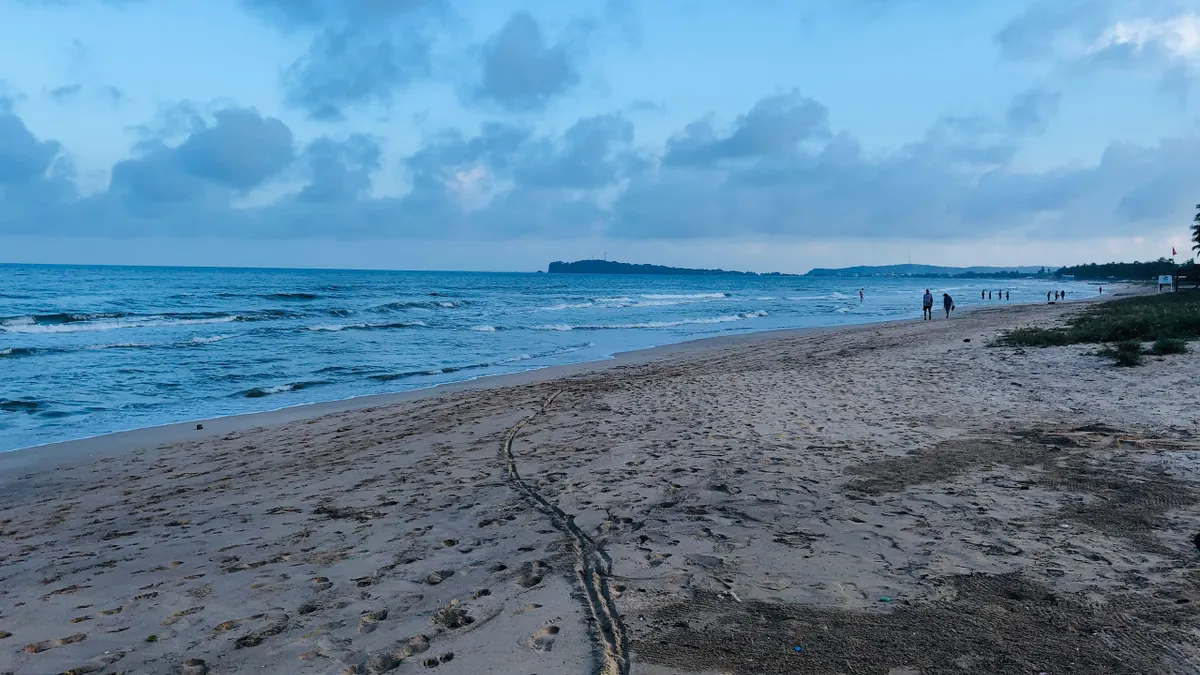
North of town, the coast unspools into the twin ribbons of sand that made Trinco’s name. Uppuveli, ten minutes out, is the sociable one — a gentle curve of beach with barefoot cafés, guesthouses and fishing boats drawn up on the sand, ideal if you like a cold drink within reach of your towel. Nilaveli, another quarter-hour north, is the show-stopper: kilometres of wide, pale sand fronting shallow, glass-clear water, backed by palms rather than crowds. Mornings here are impossibly serene — fishermen hauling nets at first light, the sea barely creased. Neither beach has been groomed into resort blandness; both still feel like the working, living coast.
Pigeon Island and life underwater
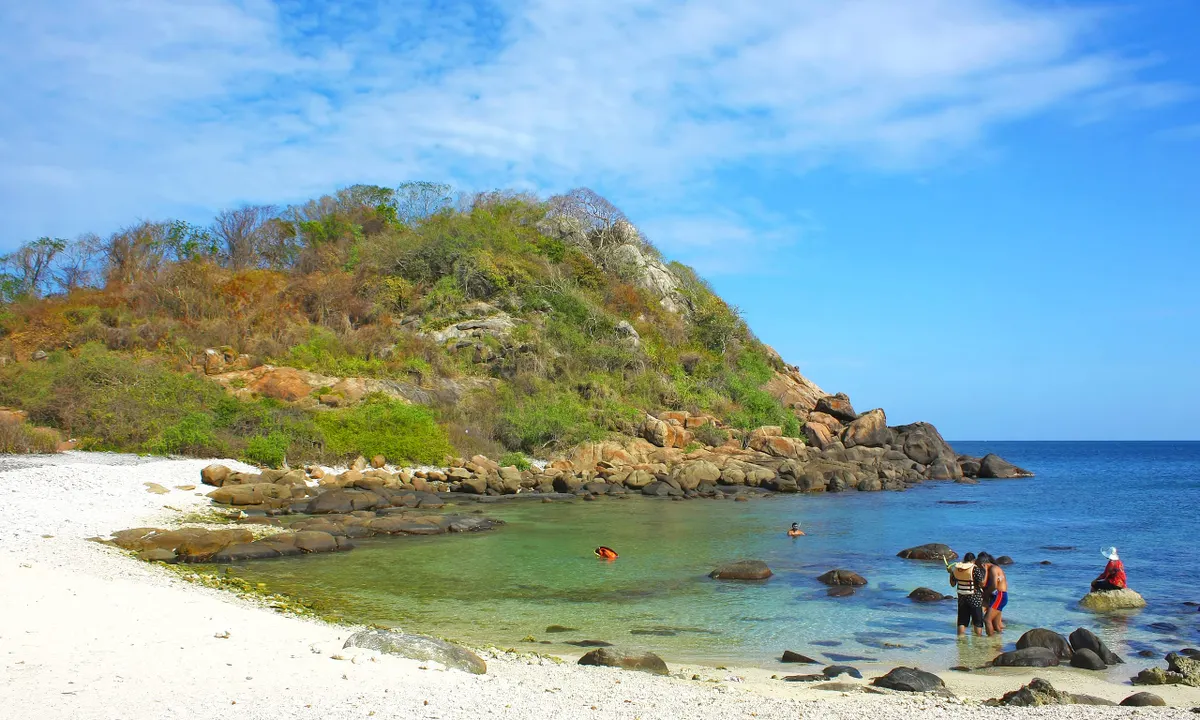
A ten-minute boat ride off Nilaveli, Pigeon Island National Park protects some of Sri Lanka’s best-preserved shallow coral reef — and delivers the island’s most rewarding snorkelling. Drift over the gardens of branching coral and you’ll share the water with parrotfish, angelfish and shoals of fusiliers; blacktip reef sharks patrol the shallows (small, shy and entirely uninterested in swimmers) and green and hawksbill turtles graze unhurriedly within metres of the beach. It’s an easy, family-friendly half-day — no diving qualification required, though divers will find plenty of operators in Uppuveli and Nilaveli running trips to deeper reefs and wrecks.
Back on the mainland, save an hour for the hot wells of Kanniya, just outside town — seven ancient stone-lined wells of naturally warm water, bound up in local legend and busy with families sluicing themselves happily with buckets. It’s more cheerful ritual than spa experience, and all the better for it.
Whales, and when to come
The deep water that made Trincomalee a naval prize also makes it a marine-mammal highway. From roughly May to September, boats head out in the calm early mornings in search of blue whales and sperm whales, often finding spinner dolphins in exuberant hundreds along the way — a mirror-image season to the whale watching off Mirissa in the island’s south. Those same months are Trinco’s prime season on land: the northeast monsoon brings the region its rain between December and February, so plan the east coast for the middle of the year and you’ll have it at its dazzling best.
Getting there
Trincomalee lies around five to six hours’ drive from Colombo, but the smarter approach is through the Cultural Triangle: the road runs almost straight from Sigiriya and Polonnaruwa to the coast in about two and a half hours, making Trinco the natural exhale after a few days of climbing rocks and cycling ruins. Temples in the morning, turtles by afternoon. Surfers and beach-hoppers can also work down the east coast toward Arugam Bay, whose season runs on the same May–September clock.
Know before you go
Dress modestly at Koneswaram — shoulders and knees covered, shoes off at the entrance — and keep a respectful distance from the resident deer in Fort Frederick. On Pigeon Island, the reef is protected and fragile: never stand on or touch the coral, and wear a rash vest rather than relying on sunscreen in the water. Sea conditions and whale sightings are always weather-dependent, so build in a spare morning if the boats matter to you. And bring cash for the small stuff — beach shacks and tuk-tuks out to Nilaveli don’t take cards.
Chasing summer sun while the south coast sleeps? Talk to Ceylon Days and we’ll route your journey east.