Южное побережье
Yala National Park
Самый знаменитый национальный парк Шри-Ланки сочетает одну из самых высоких плотностей леопардов на Земле с завораживающе красивым ландшафтом лагун, лугов и гигантских скальных выходов, спускающихся к Индийскому океану. Слоны, медведи-губачи, крокодилы и более 200 видов птиц делят эту сцену — и каждый рассветный выезд несёт в себе электризующую возможность увидеть леопарда прямо на дороге.
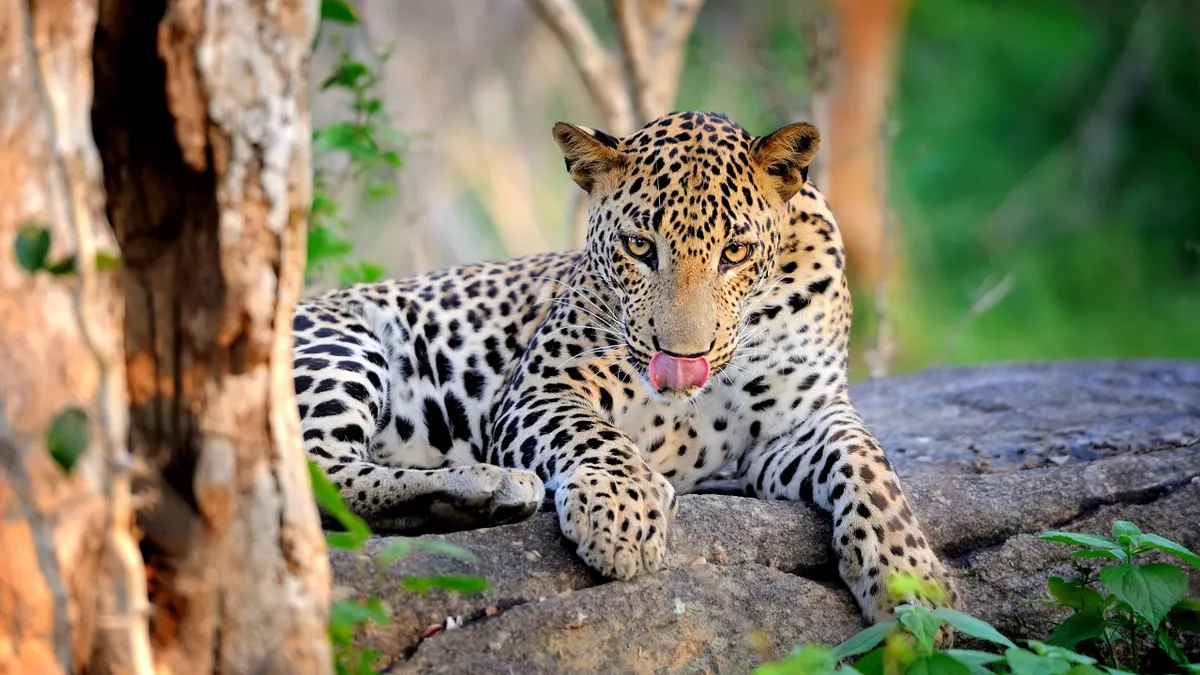
No safari destination in Asia carries quite the same charge as Yala. Spread across nearly a thousand square kilometres of Sri Lanka’s southeastern corner, the island’s most visited national park is famous for one animal above all: the leopard. Yala’s Block 1 supports one of the highest densities of leopards recorded anywhere in the world, and because these cats sit at the top of the food chain here — no lions, no tigers — they swagger about in daylight with a confidence that makes sightings genuinely realistic rather than a once-in-a-lifetime fluke.
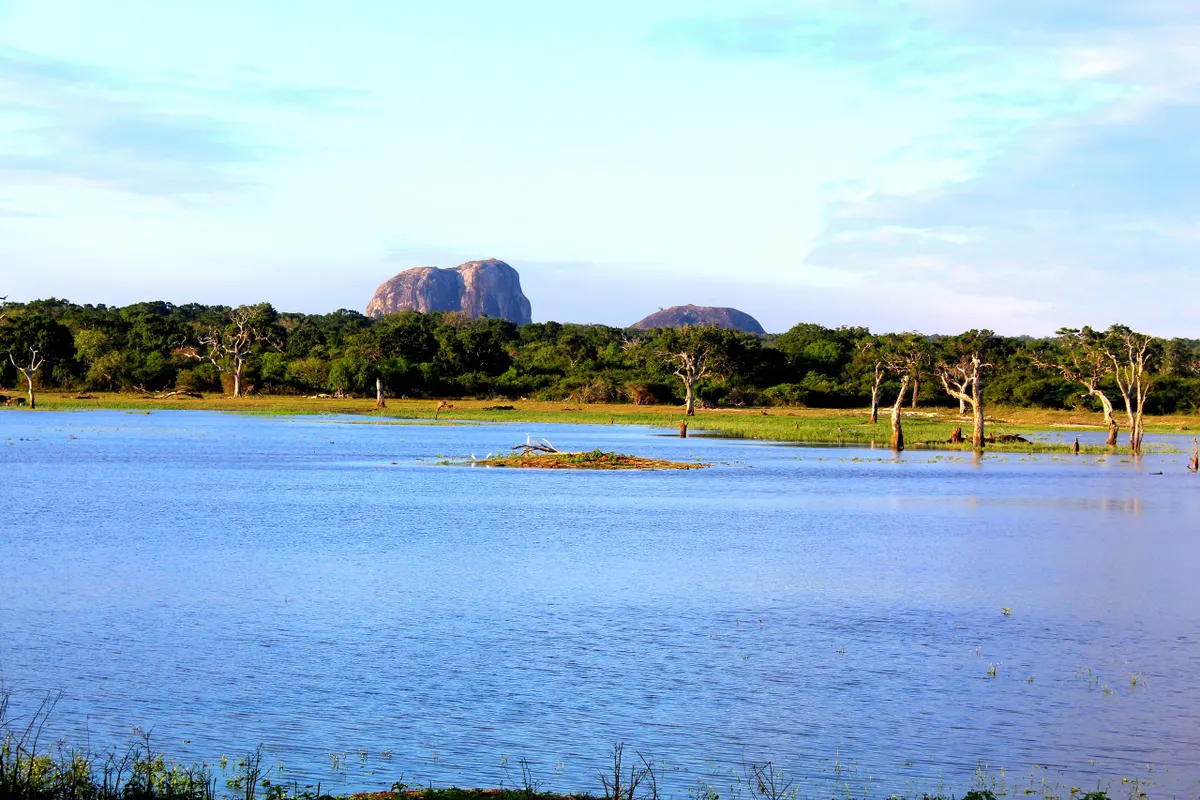
But reducing Yala to leopards sells it short. This is a landscape of rare, cinematic beauty — thorn scrub and open grassland studded with monumental granite outcrops, strings of lagoons crowded with waterbirds, and a wild, dune-backed coastline where elephants sometimes wander down to the beach. Every drive is different, and that unpredictability is precisely the addiction.
The wildlife
Leopards headline, and rightly so — draped along a rock ledge at dawn, padding down a jeep track at dusk, or glimpsed as a dappled shadow in the scrub. But keep your expectations broad and Yala delivers on every drive. Elephants appear singly and in small herds around the waterholes; sloth bears — shaggy, short-sighted and utterly endearing — emerge most reliably in May and June when the palu trees fruit; and mugger crocodiles haul out along every tank and lagoon like driftwood with teeth.
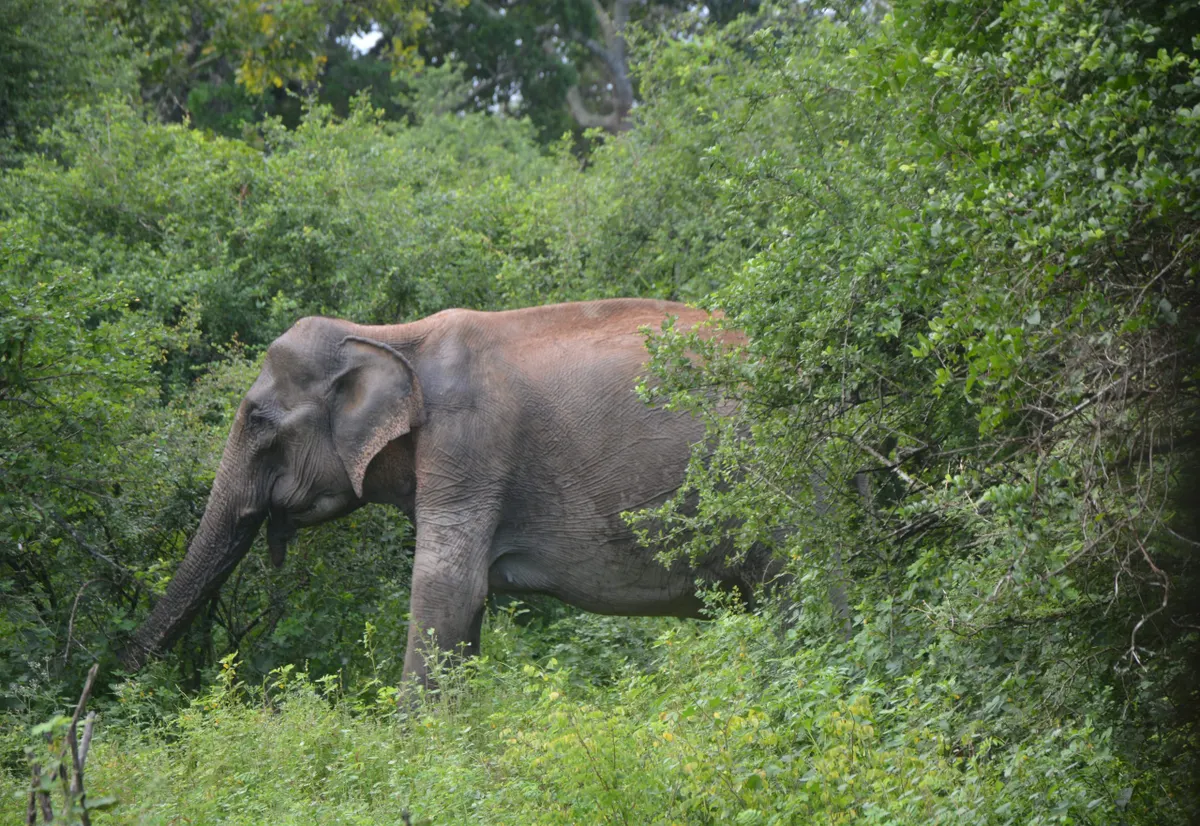
The supporting cast is superb: water buffalo wallowing in the shallows, spotted deer and sambar in the glades, wild boar, jackals, mongooses and troops of grey langurs. Birders have logged more than 200 species here, from painted storks and peacocks in full display to bee-eaters, serpent eagles and wintering flamingos on the lagoons. Bring binoculars even if you don’t consider yourself a birder — Yala will convert you.
How a Yala safari works
Game drives run in two windows: dawn (roughly first light until mid-morning) and afternoon (mid-afternoon until sunset). The early drive is the one not to miss — gates open at first light, the air is cool, and predators are still on the move. You’ll travel in an open-sided 4x4 with a driver-tracker; a good one reads alarm calls, fresh pugmarks and radio chatter, and makes all the difference to what you see. Full-day drives with a picnic lunch are also possible for the committed, letting you stay deep in the park through the quiet midday hours.
A word of honest advice: Yala’s fame means Block 1 can get busy, particularly around leopard sightings in high season. Travelling with a patient, ethical driver — one who won’t join a scrum of jeeps — matters, both for the animals and for your own experience. Quieter blocks and adjacent Lunugamvehera offer emptier tracks if you value solitude over sighting odds.
Best time to visit
Yala sits in the island’s southeastern dry zone, and the prime season runs roughly from February to July, when falling water levels pull animals to the remaining lagoons and waterholes and the scrub thins for better visibility. Note that the park traditionally closes for several weeks around September and October, at the height of the drought, to give wildlife a respite — check ahead if you’re travelling then, and consider Udawalawe, which stays open year-round, as an excellent alternative. Sloth-bear fans should target May and June for the palu fruiting season.
Getting there and where it fits
Yala anchors the southeastern corner of the classic southern loop. The park entrances near Tissamaharama sit around five to six hours’ drive from Colombo and roughly three from the hill country around Ella. Most itineraries slot Yala between the tea country and the beaches: descend from the hills, safari for a night or two, then unwind on the south coast at Mirissa or Tangalle. Pairing Yala’s leopards with Udawalawe’s elephant herds gives you Sri Lanka’s two best safari experiences in a single unhurried arc.
Stay near the park the night before your morning drive — the dawn start is early, and lodges and tented camps around Tissamaharama and Kirinda range from simple guesthouses to genuinely luxurious bush camps where elephants amble past the tents.
Know before you go
Wear neutral colours, bring a fleece for the chilly dawn drive, and pack sun protection for the afternoon one — the open jeeps offer shade but the dust and glare are real. Keep noise down at sightings, never pressure your driver to go off-track or crowd an animal, and don’t expect guarantees: leopards are wild, and the park’s magic lies partly in the suspense. Two or three drives dramatically improve your odds over one. And hold onto your hat — literally — on the washboard sections; Yala’s tracks are half the adventure.
Track leopards with us on the 6-day Wildlife Safari — Yala’s dawn drives, done properly.