Культурный треугольник
Dambulla
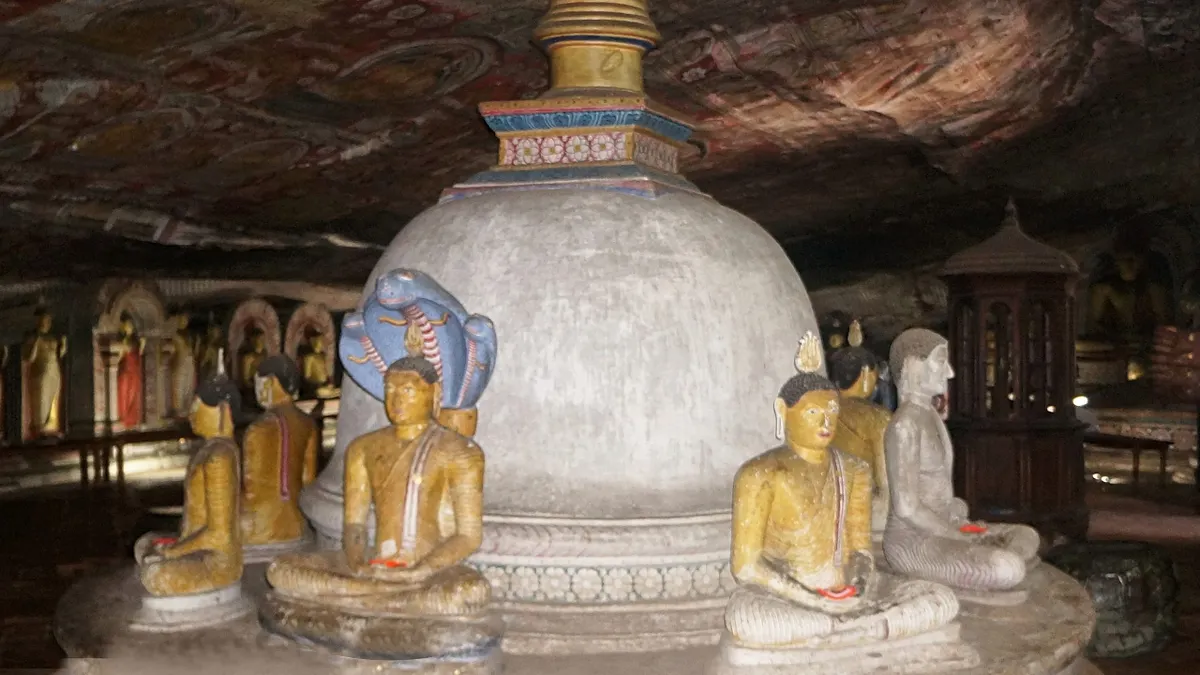
Под огромной гранитной скалой в сердце Культурного треугольника Золотой пещерный храм Дамбуллы хранит пять освещённых свечами святилищ, расписанных от пола до потолка и заполненных более чем 150 статуями Будды, — живой храм, действующий без перерыва более 2000 лет. К тому же это естественный хаб Треугольника: отсюда рукой подать до Сигирии, Канди и великого слоновьего Сбора в Миннерии.
Halfway up a massive granite outcrop above the plains of the Cultural Triangle, a row of whitewashed arches marks the entrance to Sri Lanka’s most atmospheric temple. Behind them, Dambulla’s Golden Cave Temple — a UNESCO World Heritage site — opens into five rock sanctuaries where every surface glows: ceilings ripple with painted lotus buds and seated Buddhas following the natural contours of the stone, and more than 150 statues crowd the shadows, from serene metre-high figures to a 14-metre reclining colossus carved from the rock itself.
What makes Dambulla extraordinary is its unbroken thread of devotion. Tradition holds that King Valagamba took refuge in these caves in the 1st century BC after losing his throne, and converted them into a temple in gratitude once he won it back. Kings added statues and repainted the murals for the next two thousand years — and pilgrims still climb the rock daily with lotus flowers in hand. Few places on the island compress so much history, art and living faith into a single hour’s visit.
Inside the cave temple
The climb to the terrace takes ten to fifteen unhurried minutes up broad rock-cut steps, with ever-widening views over the dry-zone canopy — on a clear day you can pick out the distant hump of Sigiriya rock. The five caves then unfold in sequence. The first holds the great reclining Buddha; the second, Maharaja Vihara, is the showstopper — a cathedral-sized cavern with over fifty statues, murals covering some 2,100 square metres of ceiling and walls, and a spring that drips ceaselessly from a crack in the rock into a golden pot. Look up: the painted ceiling follows every undulation of the stone, so the imagery seems to breathe as candlelight moves across it.
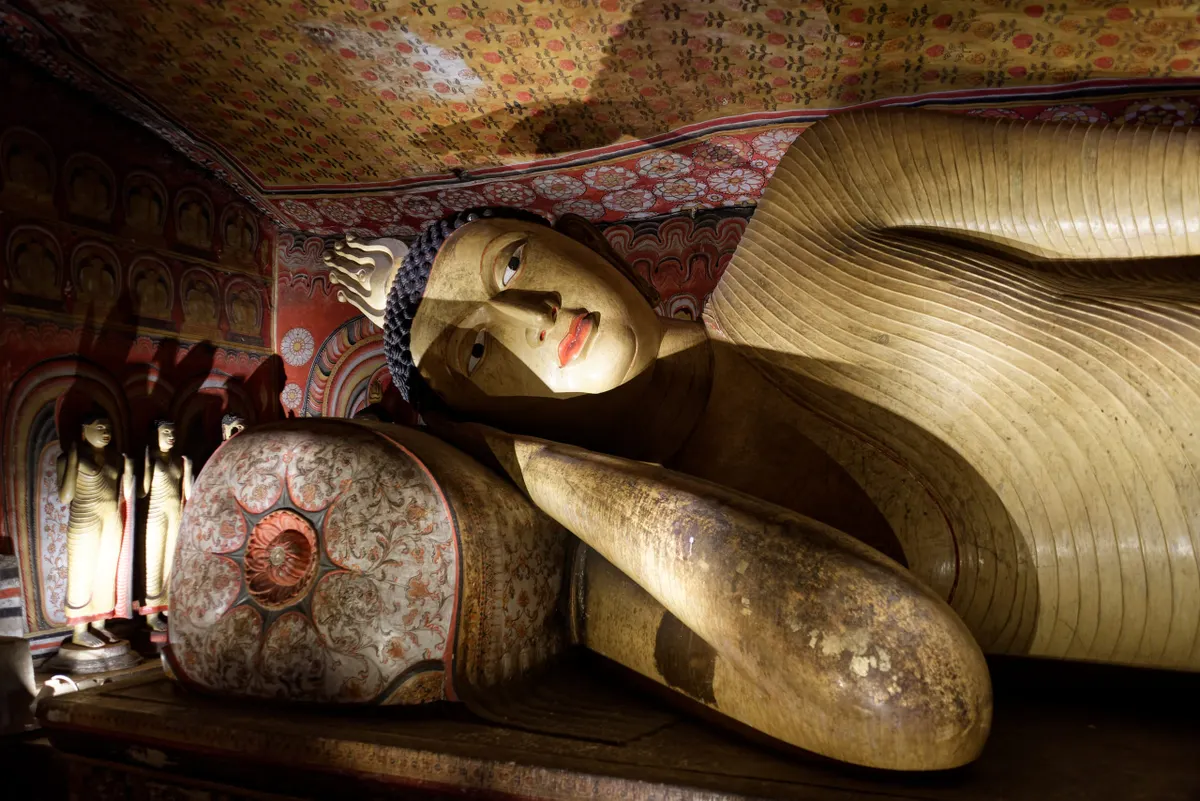
The remaining caves are smaller but no less rewarding, layering styles from successive kingdoms — including statues gilded under the Kandyan kings — into one continuous gallery of Sinhalese Buddhist art. Go early in the morning or toward late afternoon, when the light is gentle, the terraces are cool underfoot and the caves are at their most contemplative.
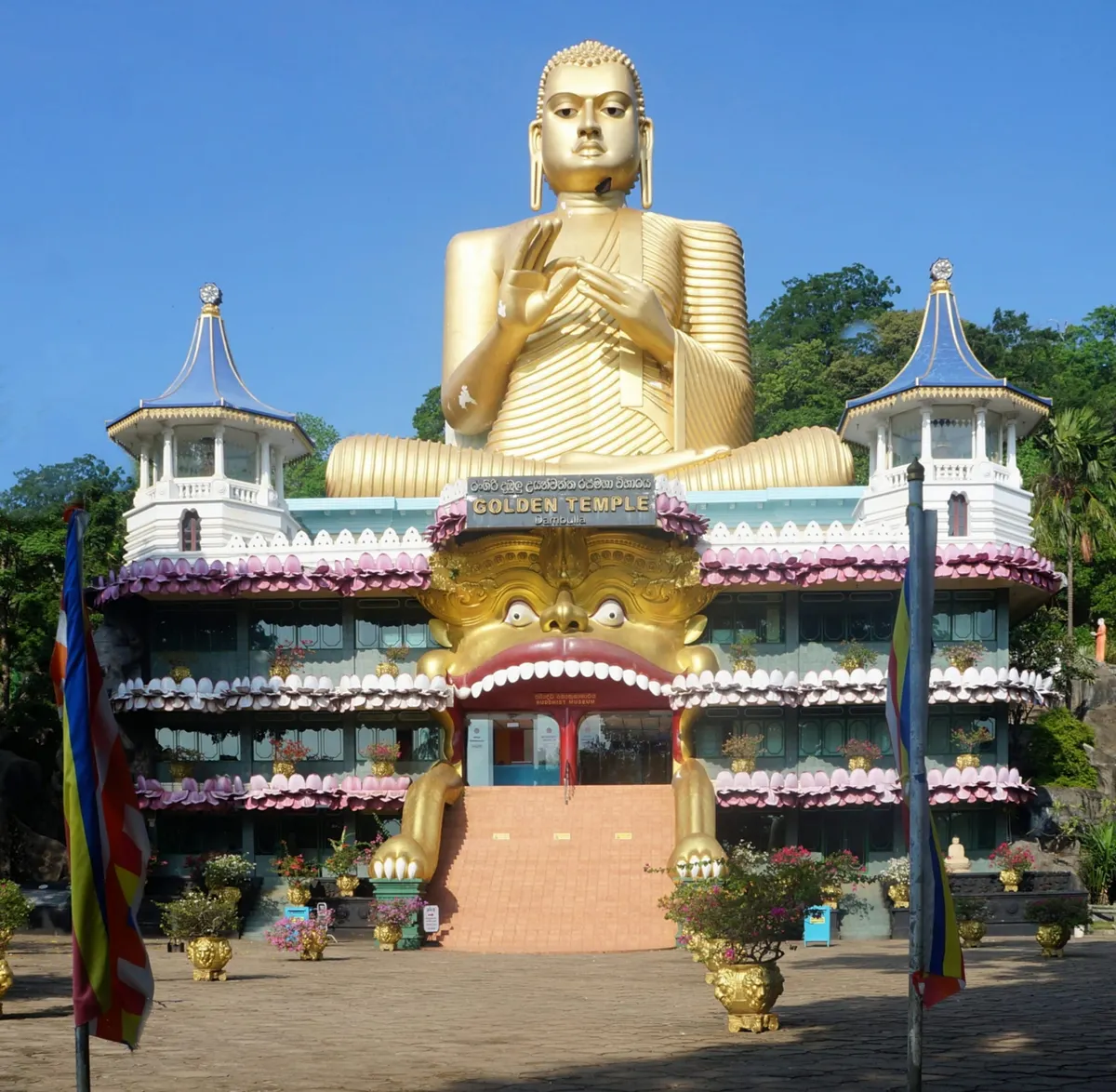
At the base of the rock stands the modern Golden Temple, crowned by an enormous seated golden Buddha — an unmissable landmark, and a striking counterpoint to the ancient caves above.
The Cultural Triangle’s crossroads
Dambulla is the natural base camp of the Cultural Triangle. The town sits at the junction of the roads linking Colombo, Kandy and the east, with Sigiriya’s rock fortress just 20 minutes away, the medieval ruins of Polonnaruwa about an hour east, and the sacred city of Anuradhapura ninety minutes north. Base yourself here for two or three nights and the whole ancient-cities circuit falls within easy day-trip range — climb Sigiriya at dawn, cycle Polonnaruwa, and still be back for a swim before dinner.
Early risers should also seek out Dambulla’s wholesale produce market, one of the largest in Sri Lanka, where lorries from across the island unload pyramids of pineapples, bananas and vegetables in a cheerful pre-dawn chaos — a slice of everyday Sri Lanka far from any guidebook circuit.
The Gathering at Minneriya
From roughly August to September, the receding waters of the ancient Minneriya reservoir — half an hour from Dambulla — host one of Asia’s great wildlife spectacles: the Gathering. Hundreds of wild elephants converge on the exposed grassy lakebed to feed, drink and socialise, sometimes 200 or more in view at once, making it the largest regular assembly of Asian elephants anywhere in the world. An afternoon jeep safari in Minneriya (or neighbouring Kaudulla, depending on where the herds are) pairs perfectly with a morning at the caves, and is easily arranged from town.
Getting there
Dambulla lies around four hours’ drive northeast of Colombo and about two hours north of Kandy, on the main highway through the island’s centre — which is precisely why almost every classic Sri Lanka itinerary passes through it. Most travellers arrive as part of a Cultural Triangle loop, pausing for the caves en route between Sigiriya and Kandy. If you’re travelling independently, buses along the Colombo–Trincomalee road stop in town, and the temple entrance is a short tuk-tuk hop away.
Know before you go
The cave temple is an active shrine: cover shoulders and knees, and remove shoes and hats before entering the terrace — socks are welcome, as the rock gets hot by mid-morning. Photography is generally allowed inside, but never pose with your back to a Buddha statue. Watch the resident toque macaques on the stairway; they are bold and quick around food and dangling sunglasses. Carry water for the climb, and allow ninety minutes to two hours to do the caves justice. The dry-zone climate is kind for most of the year, with roughly January to September the most reliable window.
Dambulla anchors our Classic Ceylon 7-day itinerary — get in touch and we’ll build the caves, Sigiriya and the Gathering into your journey.