Культурный треугольник
Anuradhapura
Первая великая столица Шри-Ланки правила около 1300 лет, и её священный город и сегодня полон паломников. Прокатитесь на велосипеде между колоссальными белыми ступами, отполированными веками древними купальнями и Шри-Маха-Бодхи — старейшим документально подтверждённым деревом, посаженным человеком, — по ландшафту Всемирного наследия ЮНЕСКО, который ощущается не руинами, а живым местом поклонения.
Anuradhapura is where Sri Lankan civilisation begins. Founded in the 4th century BC and serving as the island’s capital for roughly 1,300 years, this UNESCO World Heritage sacred city was once one of the great urban centres of the ancient world — a metropolis of monasteries, palaces and vast man-made reservoirs that sustained tens of thousands of monks. What survives today is astonishing in scale: brick stupas that rank among the largest structures ever raised in the ancient world, stone-cut bathing pools of near-modern precision, and a bodhi tree that has been tended without interruption for more than two millennia.
What sets Anuradhapura apart from other archaeological sites is that it never really died. White-robed pilgrims still stream past the ruins with lotus flowers and incense, drummers still announce the evening offerings, and the most important shrines remain exactly what they were built to be — places of living devotion. You don’t just look at Anuradhapura; you move through it alongside people for whom it has always mattered.
What to see and do
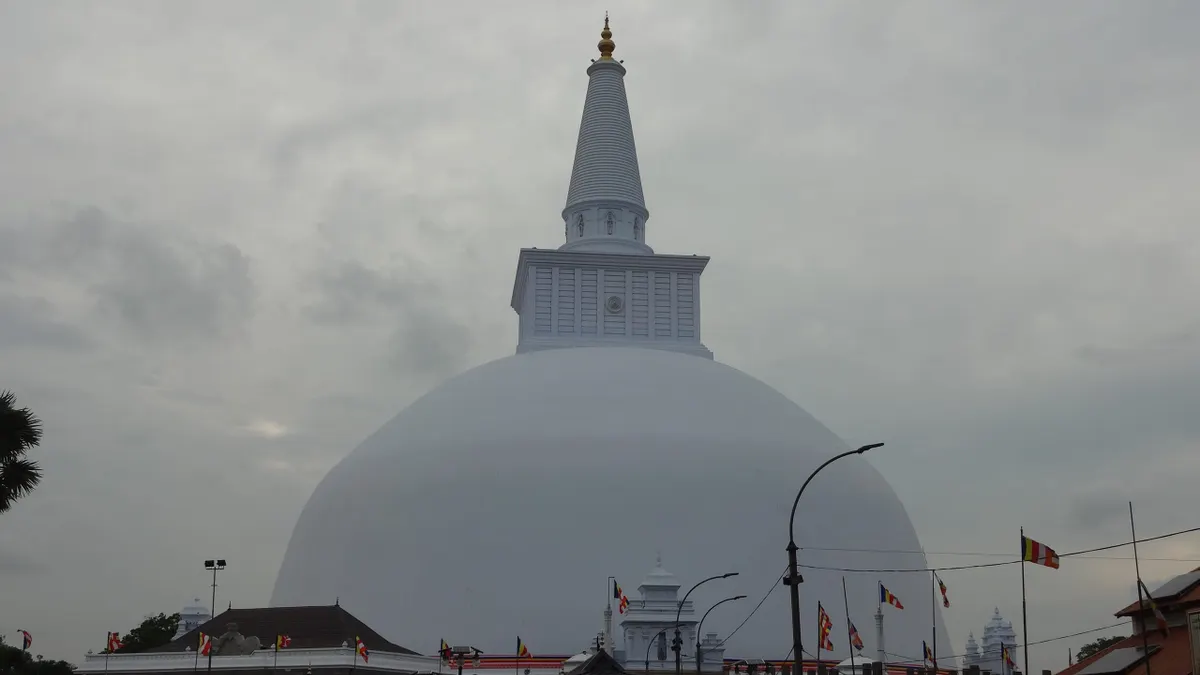
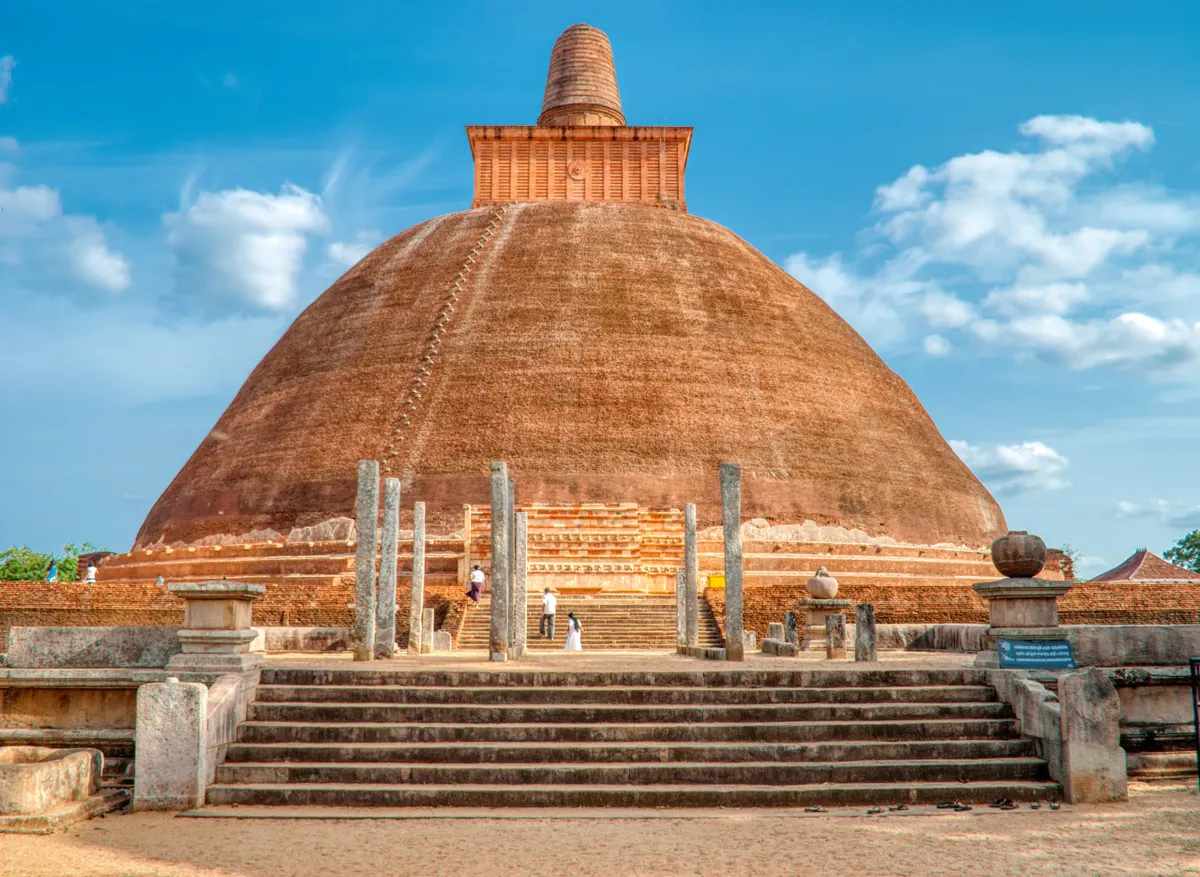
The sacred city sprawls across several square kilometres of parkland and forest, and its monuments reward a full day. Ruwanwelisaya, the great white dagoba completed in the 2nd century BC, is the emotional heart of the site — a gleaming dome ringed by a frieze of sculpted elephants, at its most magical around dusk when pilgrims circle it in the fading light. Nearby rises Jetavanaramaya, a mountain of brickwork that was, at its 3rd-century height, among the tallest structures on the planet — only the pyramids of Giza stood higher.
The holiest spot of all is the Sri Maha Bodhi, a sacred fig grown from a cutting of the very tree in India under which the Buddha attained enlightenment. Planted in the 3rd century BC, it is the oldest documented tree planted by human hands anywhere on Earth, and it has been guarded by an unbroken line of caretakers ever since. The atmosphere around its gilded railings — fluttering prayer flags, murmured chanting, the smell of temple flowers — is quietly moving even for the entirely unspiritual.
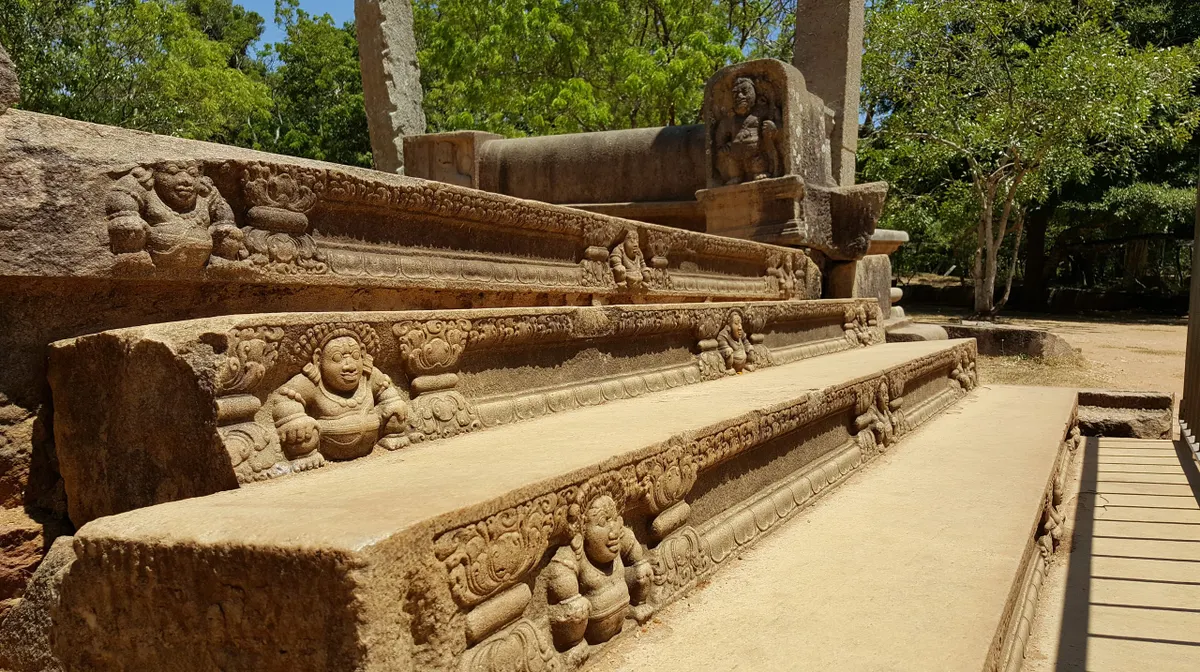
Beyond the headline stupas, seek out the quieter corners: the Abhayagiri monastery complex with its forest-shaded ruins, the elegant twin bathing ponds of Kuttam Pokuna, and the rock temple of Isurumuniya with its famous “Lovers” carving. Anuradhapura is also the best place in Sri Lanka to admire moonstones and guard stones — the intricately carved semicircular thresholds and door-flanking figures that mark the entrances to ancient buildings. The moonstone at the Abhayagiri complex is widely considered the finest in the country.
Explore by bicycle
The single best way to experience Anuradhapura is on two wheels. The sacred city is flat, shaded and laced with quiet lanes, and distances between the monuments are just far enough to make walking a slog in the dry-zone heat. Rented bicycles let you drift from stupa to monastery at your own pace, stopping wherever a ruin or a troop of monkeys catches your eye. Set out early — the light is soft, the air is cool, and you’ll share the site with pilgrims rather than tour buses.
Mihintale — where Buddhism arrived
Twelve kilometres east of town, the hilltop shrine of Mihintale is revered as the birthplace of Buddhism in Sri Lanka. It was here, in the 3rd century BC, that the missionary monk Mahinda — son of the Indian emperor Ashoka — met King Devanampiya Tissa on a hunting trip and converted him, setting the island on the course it has followed ever since. A grand stairway of some 1,840 granite steps climbs through frangipani trees to a cluster of stupas and a summit rock with sweeping views over the plains. Come for the late-afternoon light and stay until the heat drains out of the day.
Getting there
Anuradhapura sits in the northern reaches of the Cultural Triangle, around four to five hours’ drive from Colombo and roughly ninety minutes from Dambulla and Sigiriya, which makes it an easy pairing with the rest of the ancient cities circuit. Many travellers loop through Anuradhapura, Polonnaruwa and Sigiriya over two or three days — the classic Cultural Triangle itinerary — before continuing south to Kandy and the hill country. There are also direct trains from Colombo if you fancy a slower, more scenic approach.
Best time to visit
Anuradhapura lies deep in the dry zone, so it escapes the worst of the southwest monsoon. The most reliable months run from roughly January to September, with hot, bright days and cool early mornings. Whatever the season, plan your sightseeing for early morning and late afternoon — the middle of the day is fiercely hot, and the stupas’ sand courtyards must be crossed barefoot.
Know before you go
This is an active place of worship. Dress modestly — shoulders and knees covered — and remove shoes and hats at every shrine. Never pose for photos with your back to a Buddha statue; it causes genuine offence. Carry water, sunscreen and a pair of socks for the sun-baked terraces, and keep small notes handy for shoe-minders and donations. A knowledgeable guide transforms the experience here, turning fields of brick into a legible, vivid story of kings, monks and vanished waterworks.
Ready to walk through twenty centuries of history? Talk to Ceylon Days about weaving Anuradhapura into your Cultural Triangle journey.