पर्वतीय क्षेत्र
Horton Plains
हॉर्टन प्लेन्स श्रीलंका की ऊँची, जंगली छत है — 2,100 मीटर से ऊपर बादल-वन और सुनहरे घास के मैदानों का UNESCO-सूचीबद्ध पठार, जहाँ 9.5 किमी का लूप ट्रेल वर्ल्ड्स एंड की 870 मीटर सीधी खड़ी कगार और बेकर्स फॉल्स के काई-भरे झरने तक ले जाता है। भोर से पहले निकलें, धुंध से पहले पहुँचें, और रास्ते में सांभर हिरणों तथा दुनिया में और कहीं न मिलने वाले पक्षियों का साथ पाएं।
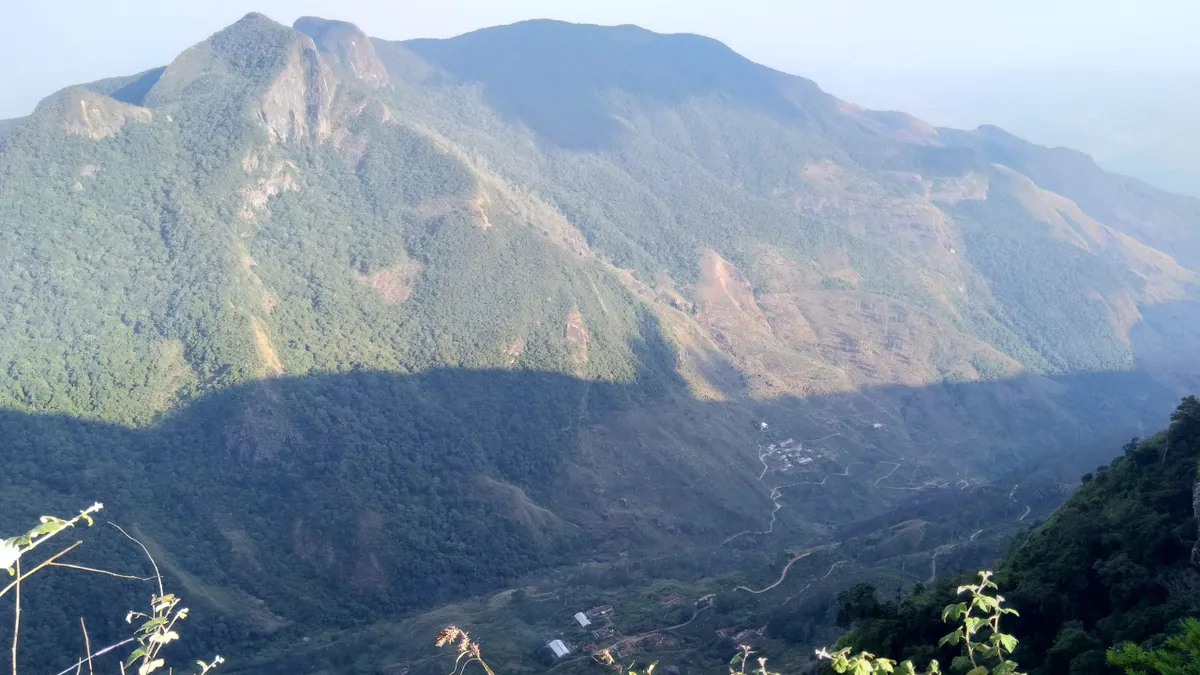
There is a moment, driving up to Horton Plains in the pre-dawn dark, when Sri Lanka stops looking like Sri Lanka. The palms and tea bushes fall away, the temperature drops with every hairpin, and you emerge at first light onto a rolling, wind-brushed plateau of golden grassland and stunted, moss-hung cloud forest more than 2,100 metres above the sea — a landscape closer to the Scottish Highlands than the tropics, except for the sambar deer grazing in the frost-silvered mist. This is the island’s rooftop: a national park and UNESCO World Heritage Site (as part of the Central Highlands listing) protecting one of the last great sweeps of montane cloud forest in South Asia, and the headwaters of three of Sri Lanka’s major rivers.
People come, above all, for an edge. At the plateau’s southern rim the land simply stops — and the drop from World’s End is one of the great sudden views in Asia.
The loop — World’s End and Baker’s Falls
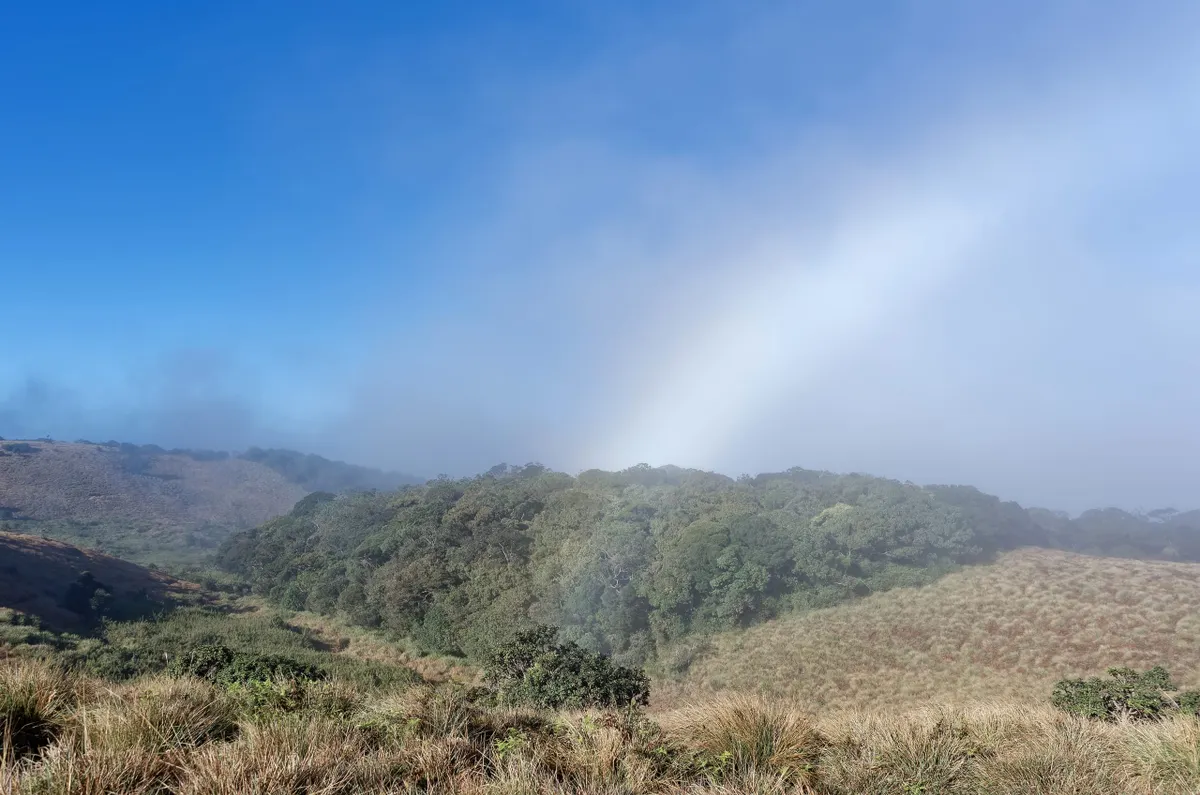
Almost everyone walks the same superb circuit: a 9.5-kilometre loop from the visitor centre, gentle by mountain standards and comfortably done in three to four hours with stops. Most guides walk it clockwise, saving the drama for the middle third. The trail crosses open grassland — patana, in Sinhala — fords clear amber streams, and ducks through tunnels of cloud forest where every branch wears a sleeve of moss and old man’s beard.
First comes the rehearsal, Mini World’s End, a respectable precipice in its own right. Then, a kilometre on, the main event: World’s End, where the plateau breaks off in a sheer escarpment plunging roughly 870 metres to the valley floor. On a clear morning the view runs over ridge after blue ridge of tea country to the southern plains and, on the clearest days, a glint of the Indian Ocean far beyond. There are no guardrails to speak of and no need for theatrics — sit a few metres back, let the wind come up the wall, and take your time.
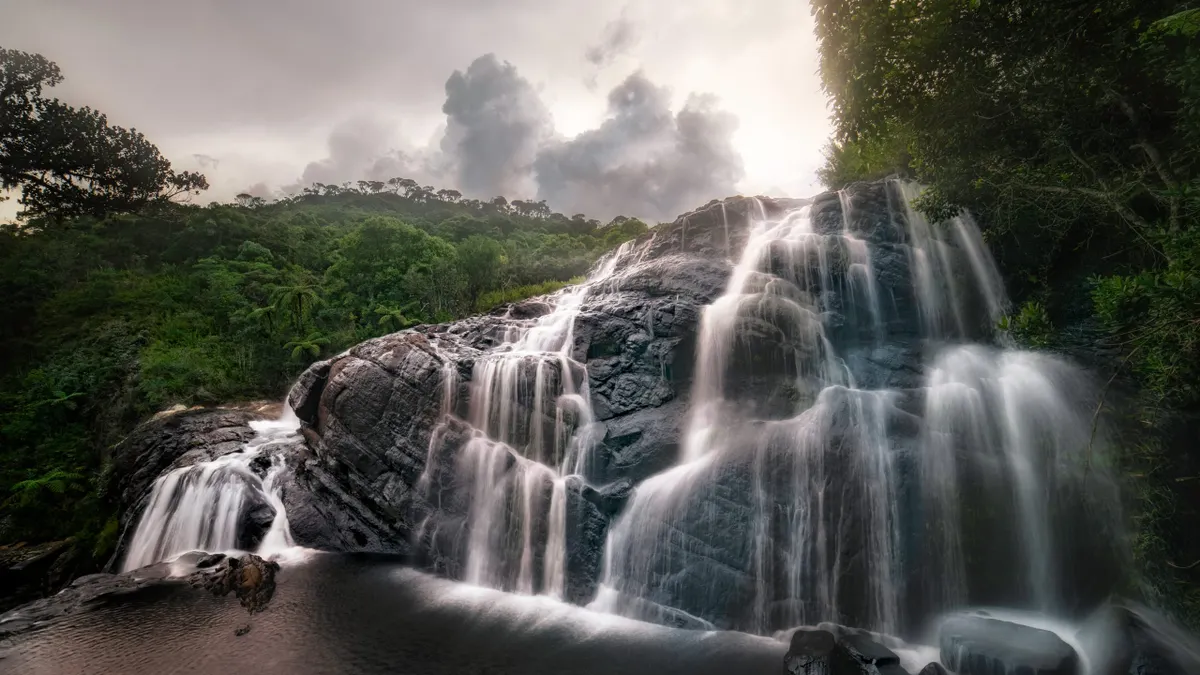
The loop’s second reward is Baker’s Falls, named for the Victorian explorer Samuel Baker — a broad, 20-metre curtain of whitewater sliding over dark rock into a fern-hung amphitheatre, reached by a short, steep side path. After rain it thunders; in the dry months it fans out into elegant braids. Either way it is the classic mid-walk pause before the easy grassland miles back to the gate.
Go early — the nine o’clock rule
Here is the single most important thing to know: World’s End keeps morning hours. From roughly 9 or 10 am, warm air rising from the lowlands condenses against the escarpment and fills the view with cloud — a white wall where the panorama should be, often for the rest of the day. The fix is simple and non-negotiable: be at the park gate when it opens around dawn, walk briskly to the viewpoint first, and linger on the return leg instead. This is why every good itinerary schedules Horton Plains as a pre-dawn start — typically leaving Nuwara Eliya, an hour or so away, at about 5 am, with the drive up through waking tea estates as part of the show. The dry season from roughly December to April gives the best odds of a clear edge, and it is worth knowing the park is one of the coldest places in Sri Lanka — near-freezing dawns are normal, so bring proper layers you can shed as the sun climbs.
The wild plateau — sambar, langurs and endemic birds
Horton Plains is a biodiversity island in the sky. The animal you will certainly meet is the sambar, Sri Lanka’s largest deer, which grazes the open plains in small herds and poses obligingly in the dawn mist. Luckier walkers spot purple-faced langurs — shaggy, bearded leaf-monkeys endemic to the island — crashing through the canopy, along with giant squirrels and, though sightings are vanishingly rare, the plateau is genuine leopard country.
For birders this is hallowed ground: the park holds nearly all of Sri Lanka’s montane endemics, including the Sri Lanka whistling thrush, dull-blue flycatcher, yellow-eared bulbul and Sri Lanka white-eye — species found on this island and nowhere else. Even the botany rewards a slow eye, from dwarf bamboo and wild rhododendron to marshy hollows studded with carnivorous sundews.
Rules that keep it pristine
Horton Plains is run with a strictness that visitors quickly come to admire. Plastic is tightly controlled — bags are checked at the gate, wrappers and bottle labels are removed or logged, and everything you carry in must come out with you. There are no food stalls beyond the entrance, no vehicles beyond the car park, and fires and drones are forbidden. Feed nothing, pick nothing, and give the sambar their space — they are wild, whatever their manners suggest. It is conservation done properly, and it is why the plateau still feels untouched.
Fitting it into your hill-country days
The park pairs perfectly with the rest of the highlands. Base yourself in Nuwara Eliya the night before, then after the morning walk you are free for tea-factory visits, an afternoon at Gregory Lake, or the gorgeous rail ride onward to Ella. Committed hikers often stack it with a night ascent of Adam’s Peak in the same week — two very different mountains, one unforgettable pair. Our Hill Country Escape 4-day tour builds the dawn start in for you, warm jackets, flask of tea and all.
Few places deliver so much strangeness and beauty before breakfast. Set the alarm; the edge of the world is waiting.
Ready for a dawn on the rooftop of Sri Lanka? Browse our tours or plan your hill-country route with us.