31 जुलाई 2026 · The Ceylon Days Team · 6 मिनट में पढ़ें
Sri Lanka Travel Tips: Everything First-Timers Should Know Before Landing
Visas, money, SIM cards, tuk-tuks versus trains versus drivers, temple etiquette, tipping, plugs and the polite way to dodge a scam — the practical field notes we give every first-time visitor to Sri Lanka.
इस पेज पर
Sri Lanka is one of the easiest countries in Asia to travel — friendly, compact, cheap by most standards, and forgiving of first-timer mistakes. But a little preparation goes a long way, and there are a handful of things (the temple photo rule, the airport SIM counter, the gem-shop tuk-tuk detour) that are much better learned before you land than after.
These are the notes we share with every guest before their trip: not a rulebook, just the practical stuff that makes the first forty-eight hours smooth and the rest of the trip smoother.
Before you fly: visa and paperwork
Most nationalities need an ETA — an electronic travel authorisation — before arrival. It is a quick online application, usually approved within a day or two, and the only site you should use is the official one at eta.gov.lk. Third-party sites charge hefty markups for the same thing (and some are outright fakes), so type the address yourself rather than clicking an ad. Print or save the approval email, check that your passport has six months' validity, and you're done. Standard tourist ETAs cover a 30-day stay and can be extended in-country if the island gets its hooks into you — it often does.
Money, cards and ATMs
The currency is the Sri Lankan rupee, and this is still largely a cash economy once you leave hotels and bigger restaurants. ATMs are everywhere in towns and accept foreign cards; withdraw in decent chunks to limit fees, and keep small notes for tuk-tuks, entrance tickets and street food — nobody ever has change for a 5,000-rupee note. Cards are accepted at mid-range hotels and restaurants upward, but assume cash for everything else. Don't bother buying rupees at home; rates at the airport and local banks are fine.
Tipping is customary and appreciated: around 10% at restaurants where a service charge isn't already added, a small daily amount for hotel housekeeping, and rather more meaningfully for drivers and guides at the end of a trip — they are the people who will have shaped your holiday most.
Stay connected: SIMs and eSIMs
Airport SIM counters at Colombo's Bandaranaike airport sell tourist packages with generous data for a few dollars — one of the cheapest mobile deals anywhere. Dialog and Mobitel have the widest coverage; either will see you through the hill country and the coasts. If your phone supports eSIMs, you can buy one before you fly and land already connected. Coverage is good almost everywhere tourists go, which matters more than you'd think: ride-hailing apps like PickMe (the local, cheaper answer to Uber) are the easiest way to get fair tuk-tuk prices in cities.
Getting around: driver, train or tuk-tuk?
This is the big planning decision, and honestly the answer is "all three, for different jobs."
- A private car and driver is how most visitors cover the island, and for good reason: distances look short on the map but roads are slow and winding, and a good driver is part navigator, part fixer, part storyteller. It shines for multi-stop routes — the cultural triangle, hill country transfers, safari mornings. This is the backbone of every itinerary we build.
- Trains are slower than driving but that's the point on the right line. The hill-country climb from Kandy through the tea estates is one of the world's great rail journeys — our Kandy to Ella train guide covers classes, sides and booking. The coastal line south from Colombo toward Galle runs close enough to the sea to catch spray.
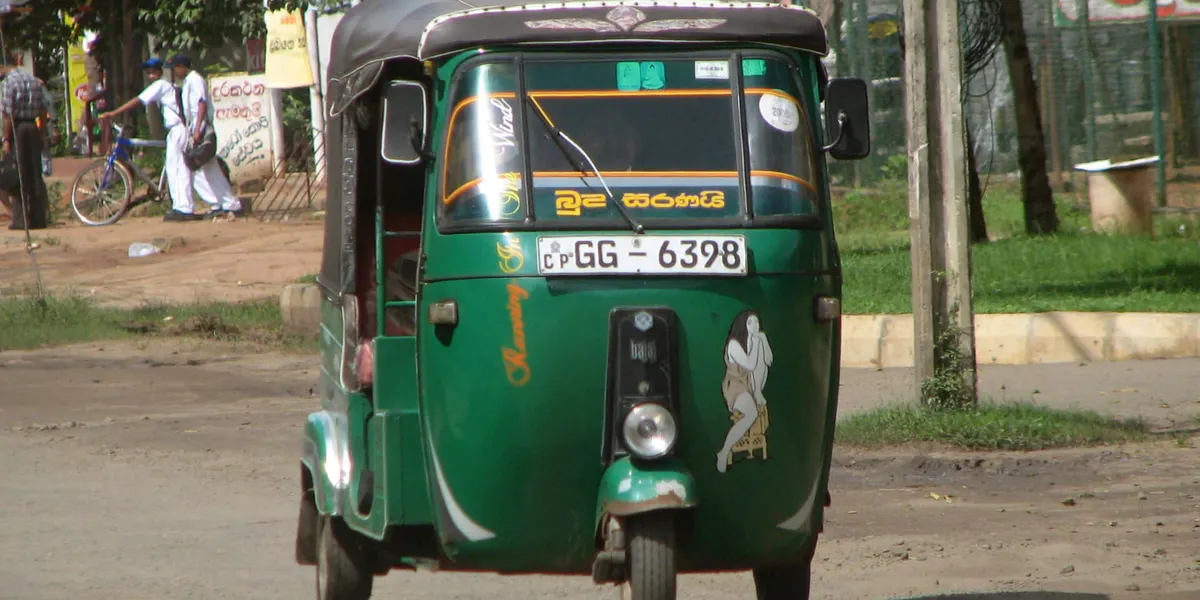
- Tuk-tuks are for short hops: a few kilometres across town, down to the beach, up to a viewpoint. Agree the fare before you get in, or use PickMe where it operates. They're loud, breezy and completely essential to the experience.
Remember that Sri Lanka drives on the left, and that lane discipline is more of a suggestion than a rule. Self-driving is possible but we rarely recommend it for first visits — let someone who understands the bus-overtaking ballet handle it.
Temple etiquette (read this one twice)
Buddhist and Hindu sites are living places of worship, and a few rules are non-negotiable. Cover shoulders and knees — carry a sarong or scarf and you'll never be caught out. Shoes and hats come off at the entrance; socks are allowed and worth having, because midday stone is genuinely hot underfoot. Inside, be quiet, don't point your feet at Buddha images when sitting, and — the one that catches people out — never pose for a photo with your back to a Buddha statue. Turning your back is considered deeply disrespectful; stand to the side instead. Some travellers with visible Buddha tattoos have been refused entry to the country in the past, so cover them. None of this is onerous, and getting it right is noticed and appreciated.
Health, water and safety basics
Tap water isn't for drinking — stick to bottled or filtered water, which every hotel provides, and consider a refillable bottle with a filter to cut plastic waste. Sri Lankan food is generally very safe; busy local places with high turnover are usually a better bet than an empty tourist restaurant. Bring high-SPF sunscreen and serious mosquito repellent (dengue exists; there's no malaria). The sea deserves respect — currents can be strong, beaches are rarely lifeguarded, and the safe swimming coast changes with the monsoon, so ask locally before diving in.
Sri Lanka is, overall, a notably safe country for travellers, including solo women, with the usual big-city common sense applied. Violent crime against tourists is rare; petty opportunism is not unknown, so keep valuables out of sight on trains and beaches.
Plugs, packing and the weather question
Sockets are mostly Type G — the British three-pin — with some older Type D around; one universal adapter solves everything. Pack light, breathable clothes, one warm layer for the hills (Nuwara Eliya nights are properly cold), that temple sarong, rain protection whatever the month, and sandals you can slip off quickly.
As for timing: the island runs on two monsoons, which conveniently means somewhere is always in season — when the southwest coast is wet from May to September, the east coast around Trincomalee and Arugam Bay is at its best, and vice versa. The full month-by-month picture is in our guide to the best time to visit Sri Lanka.
Scams to dodge politely
Nothing sinister — just a well-worn repertoire. The classics: a tuk-tuk driver insisting your hotel is "closed" (it isn't; he gets commission elsewhere), unsolicited "guides" attaching themselves at temples and expecting payment, gem-shop detours pitched as a quick stop, and inflated "special festival" prices. A smile and a firm "no thank you" solves all of them. Sri Lankans are among the warmest people you'll meet anywhere — the hustlers are a tiny, predictable minority.
Most first-timers' real mistake isn't any of the above — it's trying to see too much. Distances are slow, and the island rewards lingering. If you'd rather skip the logistics entirely, browse our tours or tell us your dates and we'll handle the moving parts, drivers, trains and temple sarongs included.
पढ़ते रहें