Triangle culturel
Sigiriya
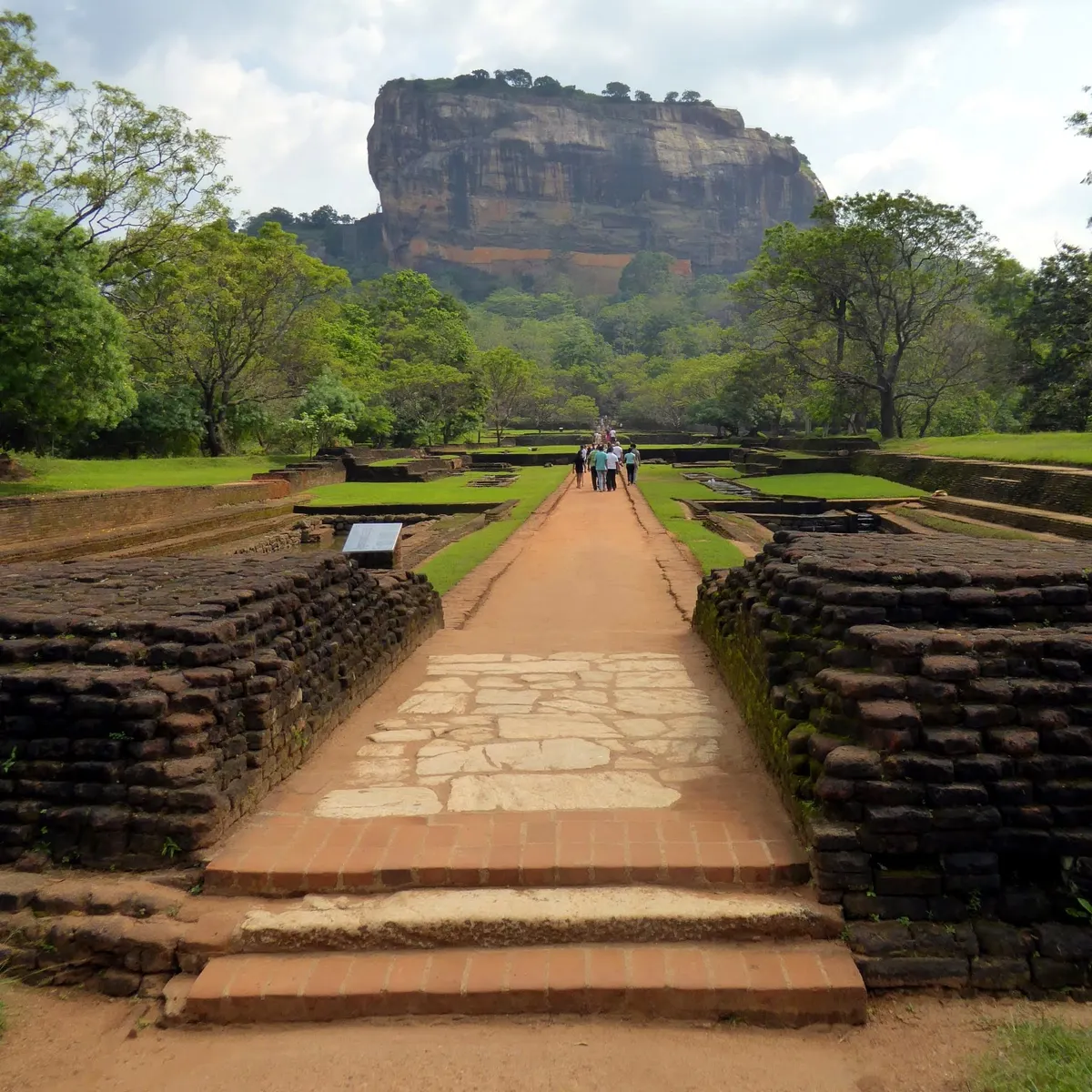
Surgissant à 200 mètres au-dessus des plaines de la zone sèche, Sigiriya est le site le plus emblématique du Sri Lanka : une citadelle royale du Ve siècle bâtie au sommet d’une colossale colonne de roche. Passez le mur miroir et les fresques des demoiselles des nuages, franchissez les pattes du lion, puis atteignez les ruines du palais sommital pour un panorama à 360° sur la jungle, les réservoirs antiques et les collines bleutées au loin.
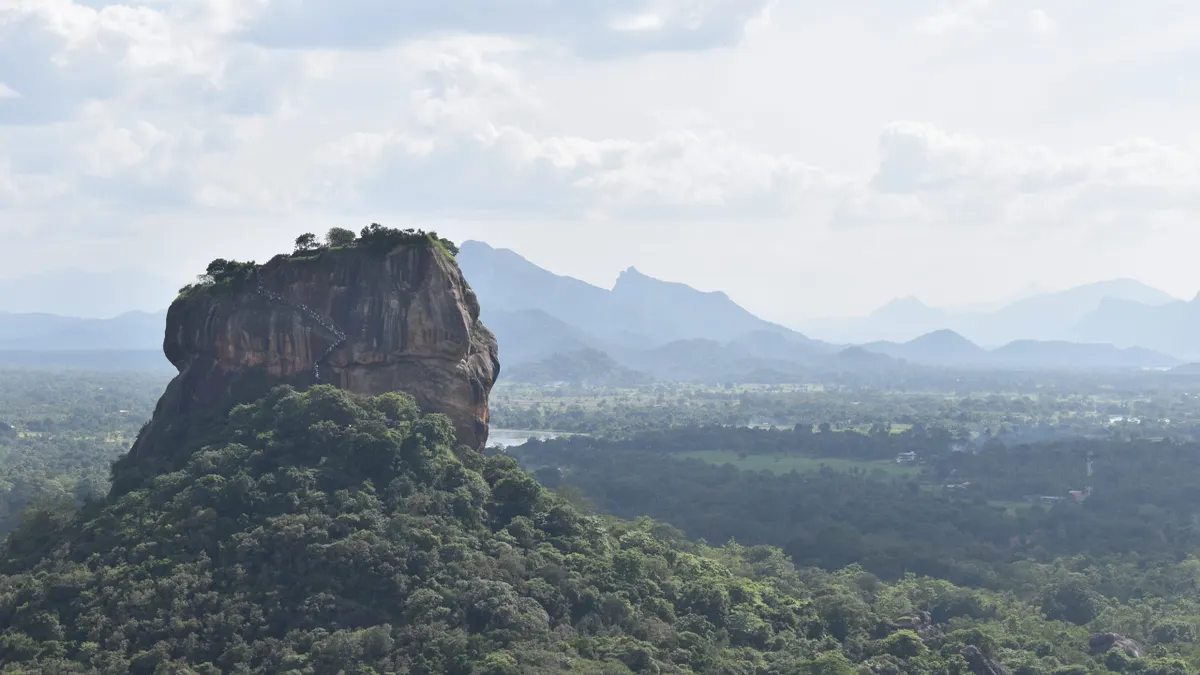
There are famous ruins, and then there is Sigiriya. From miles away across the flat, tank-studded plains of the Cultural Triangle, the rock appears first as a smudge on the horizon, then as something impossible — a sheer-sided column of gneiss shooting 200 metres straight up out of the jungle, with the remains of a royal palace spread across its summit. UNESCO listed it as a World Heritage Site in 1982, and it remains the one place in Sri Lanka that even the most ruin-weary traveller refuses to skip.
The story behind it is as dramatic as the setting. In the late 5th century, King Kashyapa seized the throne from his father and, fearing revenge from his exiled brother, moved his capital from Anuradhapura to this improbable natural fortress. In under two decades his engineers wrapped the rock in ramparts and moats, laid out pleasure gardens fed by sophisticated hydraulics, painted galleries of celestial maidens onto the rock face and crowned the summit with a palace complex. Kashyapa’s reign ended in battle around 495 AD, and Sigiriya was handed to monks before slipping quietly back into the jungle — which is exactly why so much of it survives.
The climb — frescoes, mirror wall and the lion’s paws
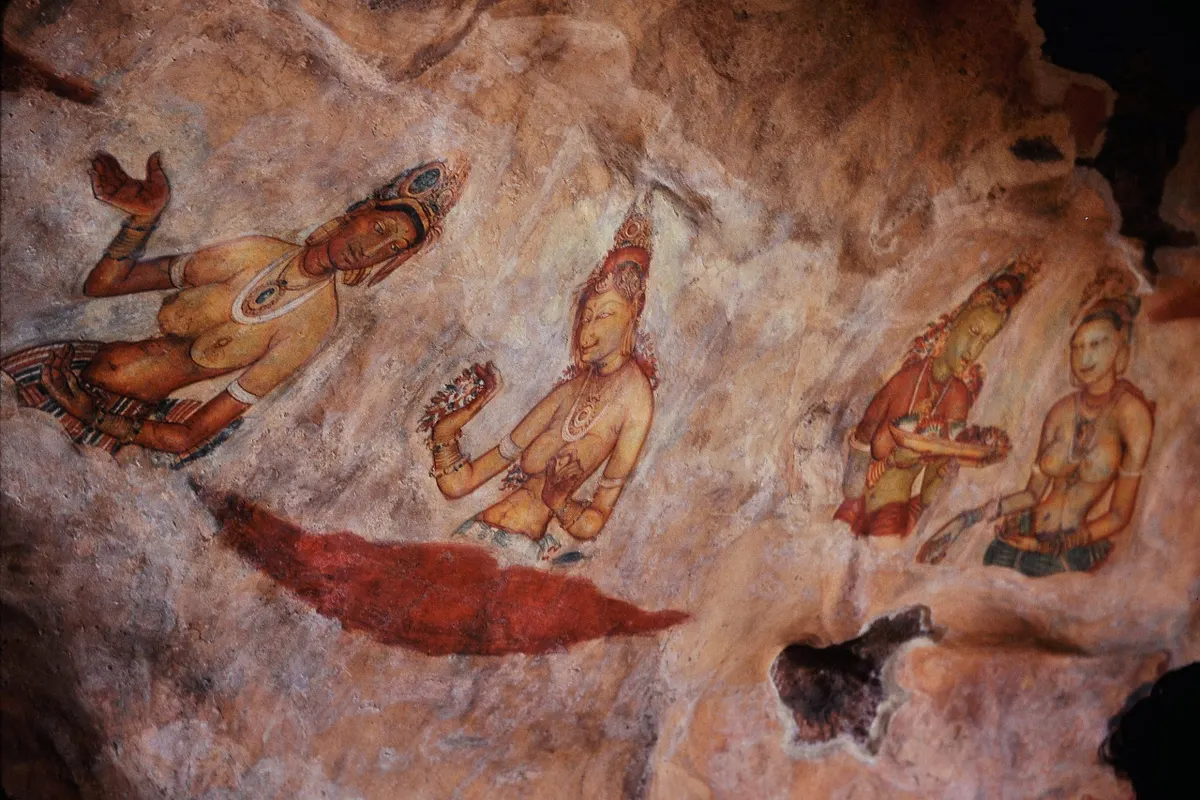
The ascent unfolds in acts, and pacing yourself is half the pleasure. You enter along a causeway through the water gardens, cross the boulder gardens where monks once meditated under carved drip ledges, then begin the stairways proper. Partway up, a spiral staircase delivers you to the fresco gallery, a sheltered pocket in the rock face where the famous cloud maidens — bare-shouldered, jewel-laden women painted more than 1,500 years ago — still glow with astonishing freshness. Of the hundreds that once covered the western face, around twenty remain, and they are worth every step.
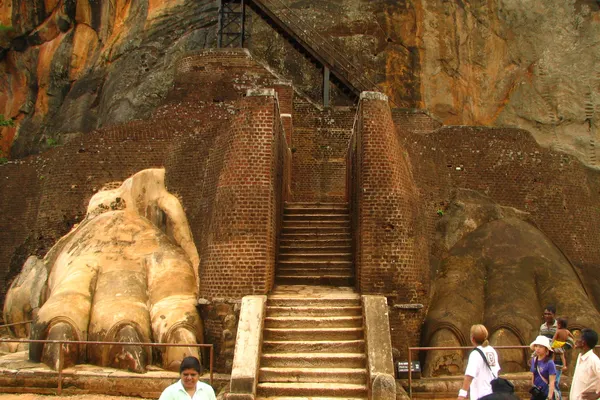
Just below the gallery runs the mirror wall, a polished plaster surface so finely burnished that visitors a thousand years ago could see their reflections in it. Many of them scratched verses about the frescoes into the plaster — some of the oldest graffiti on earth, and an unexpected window into how medieval Sri Lankans flirted, joked and marvelled. Further up, the path arrives at the Lion Platform, where two colossal carved paws flank the final staircase. Originally the whole entrance was a gigantic brick-and-plaster lion — visitors climbed into its mouth to reach the palace. Only the paws survive, but they are enough to reset your sense of scale.
The summit itself is a windswept, terraced acre and a half of foundations, cisterns and a rock-cut throne, with views that roll out over green canopy, silver reservoirs and the blue silhouettes of the hill country far to the south. Sunrise and late afternoon are the magic hours, both for the light and for the cooler air.
The gardens — the oldest landscaping on the island
It is easy to treat the gardens at the base as a warm-up, but slow down: they are among the oldest surviving designed landscapes in Asia. Symmetrical pools, island pavilions and bathing tanks are laid out along a precise central axis, and after rain the 5th-century fountains — fed by underground conduits and simple pressure — still bubble to life. The transition from formal water gardens to organic boulder gardens to the terraced gardens climbing the rock is a deliberate piece of theatre, building anticipation all the way to the summit.
Pidurangala — the sunrise alternative
Two kilometres north stands Pidurangala, a sibling rock topped by an ancient monastery. The short, scrambly climb (about 30–45 minutes) ends on a bare granite dome with the definitive view of Sigiriya itself, floating above the mist with the sun rising behind it. Many travellers do both: Pidurangala for dawn, then Sigiriya mid-morning once the tour buses thin out. If you only have the energy for one climb and the photograph matters more than the frescoes, Pidurangala is the budget-friendly, crowd-light choice — but it is no substitute for standing between the lion’s paws.
Getting there and pairing it well
Sigiriya sits at the heart of the Cultural Triangle, roughly four to five hours’ drive from Colombo and 2.5 hours from Kandy. Most travellers base themselves in Sigiriya village, Habarana or Dambulla for a night or two. The pairing possibilities are excellent: the painted cave temples of Dambulla are 30 minutes away, the ruined medieval capital of Polonnaruwa about an hour, and an afternoon jeep safari to Minneriya or Kaudulla can put you in front of the Gathering — one of the largest wild elephant congregations on earth, at its peak from roughly July to October.
Know before you go
- Start early. Gates open at first light, and the difference between climbing at 7 am and 11 am is measured in sweat and crowd density. The full ascent is around 1,200 steps; allow two to three hours for the whole site.
- Wear proper shoes and carry water. The upper stairways are exposed metal walkways bolted to the rock — sturdy, but not for flip-flops.
- Photography of the frescoes is restricted to protect the pigments — enjoy them with your eyes and buy the postcard.
- Watch for wasps near the Lion Platform; signs ask for quiet, and guides take them seriously.
- Foreign visitors pay a site entry fee that also funds conservation — check current fees locally, as they change periodically.
- December to April is the driest, most reliable window in the Cultural Triangle, though Sigiriya is climbable year-round between showers.
Sigiriya anchors our Classic Ceylon 7-day tour, where it slots naturally between Dambulla’s caves and the Kandy road. However you build your route, give the rock a full morning — it has been waiting 1,500 years for you.
Ready to stand on the summit? Browse our tours or talk to us about a tailor-made itinerary.
Sélectionné pour vous