Montagnes du thé
Adam’s Peak
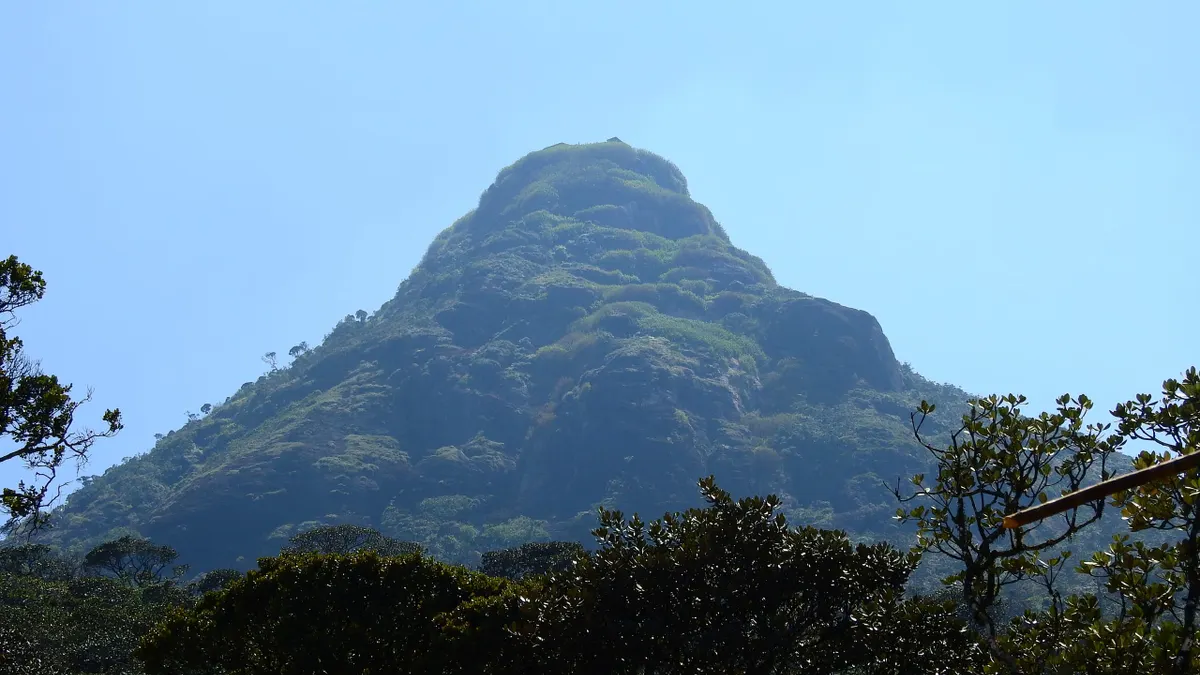
Le pic d’Adam — Sri Pada, l’empreinte sacrée — est la montagne la plus sainte du Sri Lanka : un cône de 2 243 mètres que l’on gravit de nuit par un escalier d’environ 5 500 marches. Vénéré par les bouddhistes, les hindous, les musulmans et les chrétiens, il récompense les pèlerins d’un lever de soleil au-dessus des nuages et de l’ombre triangulaire parfaite que la montagne projette sur eux. Saison : de décembre à mai.
Some mountains you climb for the view. Adam’s Peak you climb for something harder to name. For well over a thousand years, pilgrims have been walking through the night up this 2,243-metre cone in Sri Lanka’s southern hill country, drawn by the Sri Pada — the “sacred footprint”, a depression in the summit rock that four faiths claim as their own. Buddhists honour it as the mark of the Buddha; Hindus as Shiva’s; Muslims and many Christians as the first footstep of Adam after his fall from Eden; others link it to St Thomas. Whatever you believe, there are few places on earth where so many traditions kneel at the same stone — and fewer still where the act of arriving is this beautiful.
Because you climb in darkness. The classic ascent begins between 2 and 3 am, joining a river of pilgrims — sarong-clad grandmothers, barefoot monks, entire three-generation families — moving up a stairway of roughly 5,500 steps that in season is strung with lights, so that from the valley the mountain appears wearing a necklace of stars. What waits at the top is one of Asia’s great sunrises.
The night climb — steps, tea shacks and starlight
From the trailhead village of Dalhousie (Nallathanniya), the route starts deceptively gently — a stroll past the Japanese Peace Pagoda and through tea bushes — before the steps begin in earnest and simply do not stop. Count on three to four hours up at pilgrim pace, and almost as long coming down, when your knees discover muscles they had forgotten.
In pilgrimage season the mountain looks after you. Tea shacks line the stairway all the way up, selling sweet milk tea, roti and ginger biscuits at all hours; rest stops glow with lanterns; and the shared rhythm of the crowd — the elderly climbing on faith alone, strangers calling encouragement — carries you higher than your legs do. First-time pilgrims are teased and blessed in equal measure, and the greeting exchanged on the steps, wishing fellow climbers a peaceful ascent, is part of the mountain’s liturgy.
Sunrise and the shadow — the summit reward
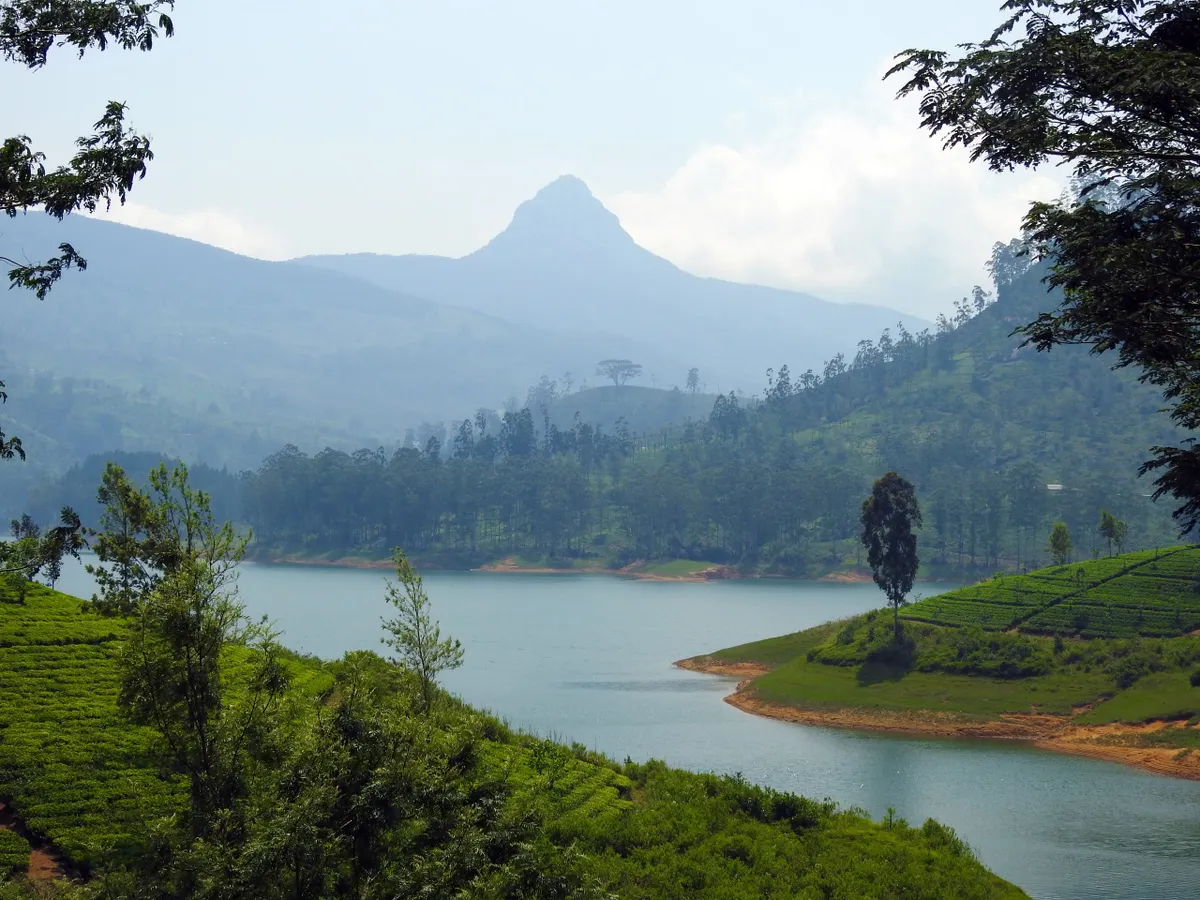
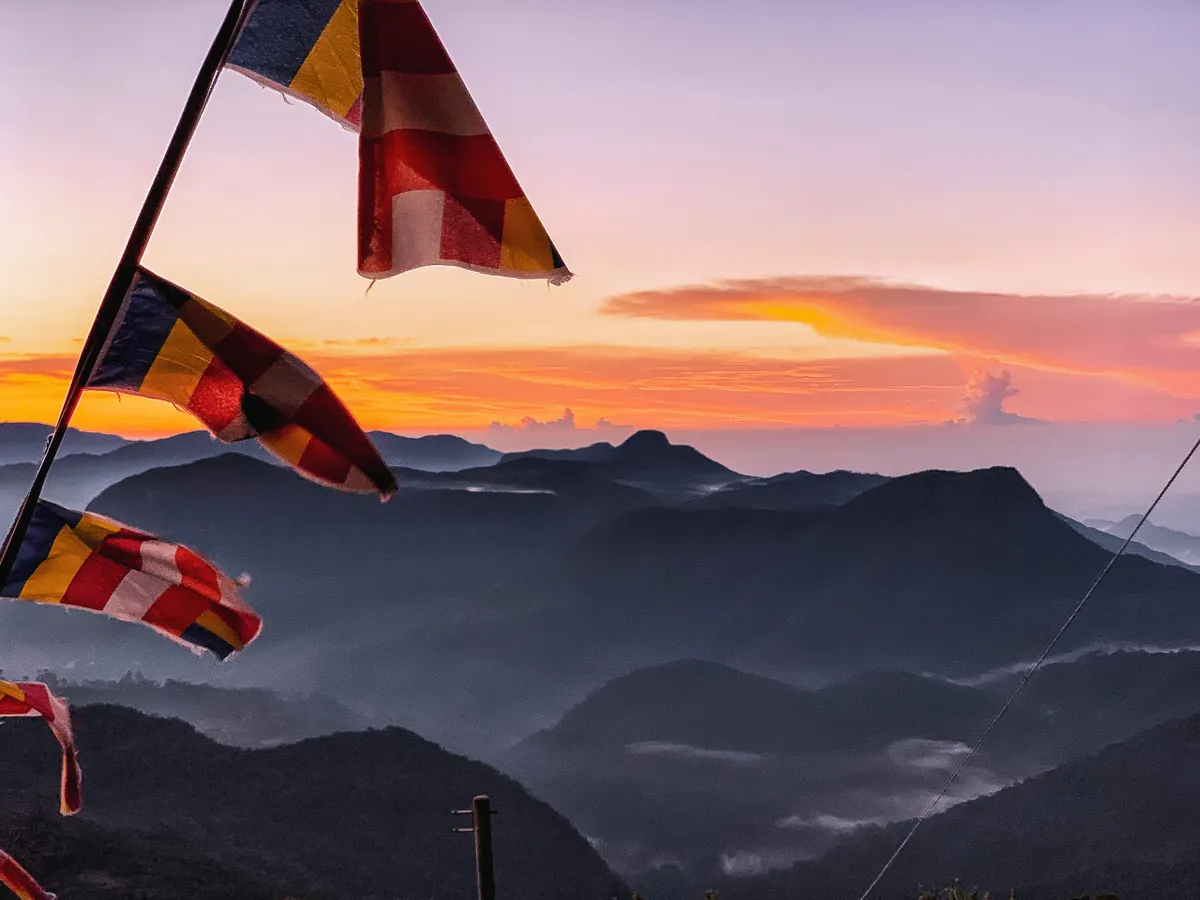
Time it right and you reach the small summit terrace in the cold dark, wrapped in every layer you own, as the east begins to pale. Then it happens: the sun breaks the horizon over a floor of clouds, the bell of the summit shrine rings out — pilgrims traditionally ring it once for each ascent they have made — and, in one of nature’s most uncanny performances, the rising sun casts the mountain’s own shadow westward onto the cloud sea: a perfect, impossibly sharp triangle that seems to float free of the peak itself, shrinking slowly as the sun climbs. Photographs do not prepare you for it. The panorama beyond takes in the lakes and ridges of the tea country, on clear mornings all the way to the coastal plains.
When to go — season matters enormously
Adam’s Peak runs on the pilgrimage calendar. The season opens with the Unduvap poya (full moon) in December and closes at Vesak in May — and within that window the mountain is at its generous best: the stairway lit through the night, tea shacks open, crowds warm and purposeful, and the weather at its driest and clearest. Weekends and poya full-moon nights draw enormous crowds, when the final steps can slow to a shuffle — magical for atmosphere, less so for schedules. Midweek climbs are the sweet spot.
Out of season (roughly June to November) the mountain is a different proposition: the lights are off, the shacks shuttered, and the southwest monsoon wraps the peak in rain, wind and leech-friendly mist. Experienced hikers still climb it with head torches and rain gear, but sunrise is a lottery and the ascent is a serious, self-sufficient undertaking. If the shadow and the pilgrim spectacle are the point — and they are — come in season.
A few honest tips
- Take the climb seriously but not fearfully: anyone reasonably mobile can do it, and the steps have handrails on the steep upper sections. It is the descent that punishes — trekking poles are worth their weight.
- Bring warm layers and a windproof shell; the summit before dawn is genuinely cold, often near single digits, and you may wait an hour for sunrise.
- Carry water, small cash for tea stops, and a head torch even in season.
- Dress respectfully — this is a living shrine, and shoulders-covered modesty is appreciated at the summit.
Getting there and pairing it well
The trailhead at Dalhousie sits deep in Hatton’s tea country, about two hours’ winding drive from the Hatton railway station — itself one of the loveliest stops on the hill-country line. Most climbers arrive the previous afternoon, sleep a few hours in a Dalhousie guesthouse, and start walking at 2 am. The peak slots naturally into a hill-country circuit: pair it with the misty lakes and colonial airs of Nuwara Eliya, the dawn plateau walk at Horton Plains or the viewpoints and waterfalls of Ella, riding the tea-country railway between them. Our Hill Country Escape 4-day tour shows how the pieces fit — and how to schedule the climb so the rest of your trip forgives your legs.
However many mountains you have climbed, this one is different: you go up in the dark with a thousand strangers and come down at dawn feeling, somehow, that you were part of something.
Ready to earn your sunrise? Browse our tours or ask us to build the climb into your itinerary.