16 juillet 2026 · The Ceylon Days Team · 5 min de lecture
Kandy's Esala Perahera: A Guide to Sri Lanka's Greatest Festival
Ten nights of drummers, whip crackers, fire dancers and dozens of adorned elephants honouring the Sacred Tooth Relic — what the Esala Perahera is, how the nights build to the Randoli finale, and how to actually get a seat.
Sur cette page
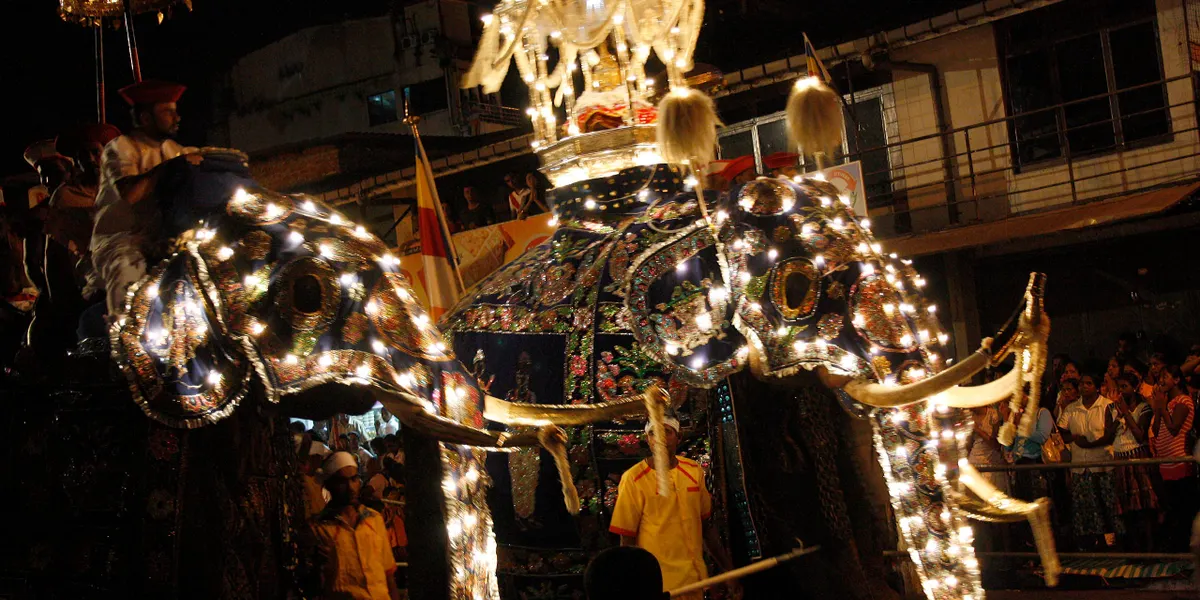
Once a year, for ten nights in July or August, the hill capital of Kandy becomes the stage for what may be Asia's most spectacular religious pageant. Streets that are ordinary shopping lanes by day fill after dark with torchlight, the crack of whips, waves of drumming — and then the elephants come: dozens of them, robed in embroidered cloth stitched with lights, walking in slow procession around the Temple of the Tooth.
This is the Esala Perahera, and no photograph does it justice. It is loud, hypnotic, devout and joyous all at once, and it has been happening in some form for well over a millennium. If your travel dates can possibly bend toward it, bend them.
What the Perahera actually is
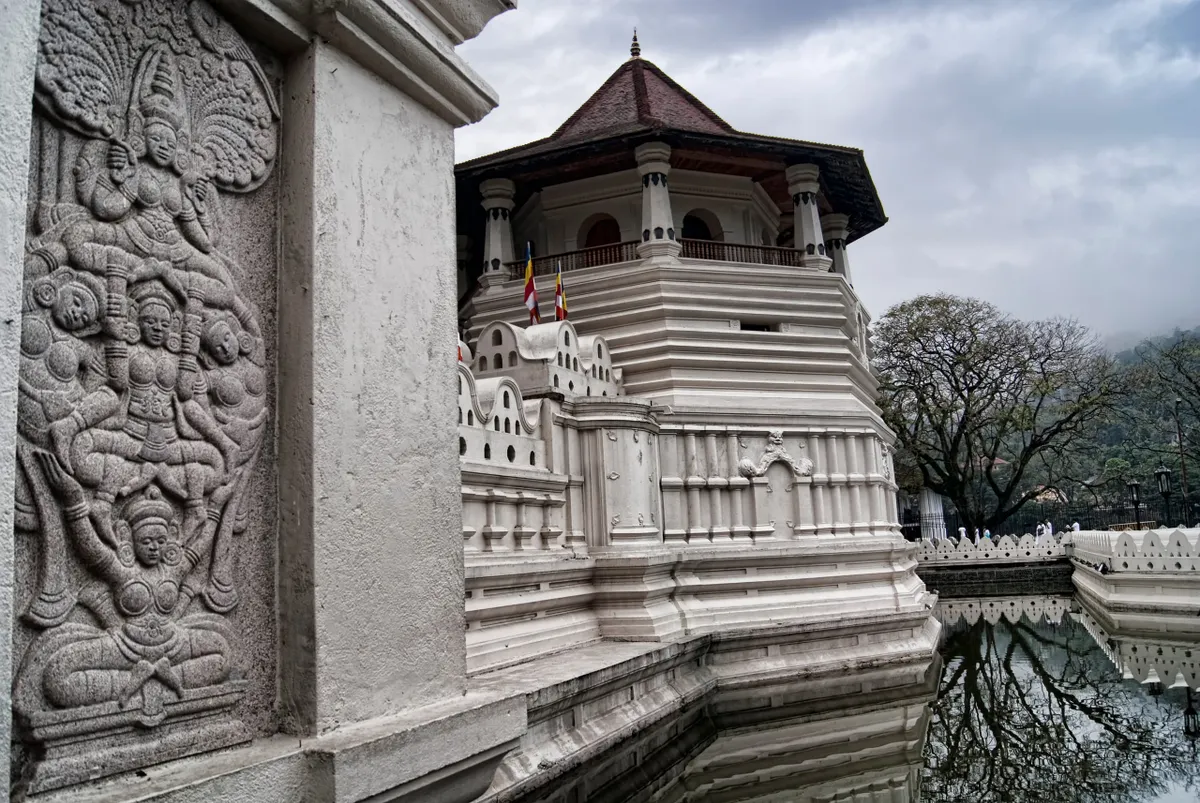
At the heart of it is the Sacred Tooth Relic of the Buddha, enshrined in Kandy's Temple of the Tooth (the Sri Dalada Maligawa) and, for centuries, the palladium of Sinhalese kingship — whoever held the relic held the moral right to rule. The Perahera is the annual act of public homage to it: a replica golden casket of the relic is carried through the streets on the back of the temple's grandest tusker, the Maligawa tusker, under a canopy, walking on a carpet of white cloth unrolled before its feet.
The festival's roots reach back to ancient Anuradhapura, where the relic arrived in Sri Lanka in the 4th century, and processions in its honour are recorded from that era. The modern form took shape under the Kandyan kings, who joined the Buddhist procession with those of four guardian-deity shrines — Natha, Vishnu, Kataragama and the goddess Pattini — so what you see today is really five peraheras walking as one, each devale contributing its own elephants, drummers and dancers. It is both an act of devotion and a prayer for rain to bless the harvest.
Ten nights, building to a crescendo
The Perahera is not a single event but a ten-night arc, timed to end on the full moon of the Esala season (falling in July or August).
- The Kumbal Perahera occupies the first five nights. It is the "smaller" procession — a relative term, since it already features drummers, dancers and elephants — and its early nights are quieter, with thinner crowds and shorter routes. If you want atmosphere without the crush, night three or four of the Kumbal is a lovely secret.
- The Randoli Perahera takes over for the final five nights, growing longer and grander each evening. Randoli refers to the palanquins of the deity shrines that now join the procession. By the last two nights the pageant runs to its fullest length — the greatest number of elephants, the full corps of dancers — and the city is packed to the rooftops.
The final night, ending on the Nikini/Esala full moon, is the climax, followed the next day by the daylight water-cutting ceremony at the Mahaweli River, which closes the festival.
What you'll see from the pavement
The procession unfolds in a fixed grammar, and knowing it doubles the pleasure:
- Whip crackers open each night's perahera, their whips snapping like gunfire to clear the route and announce the procession — you'll hear the Perahera before you see it.
- Fire dancers follow: spinning wheels of flame, torch jugglers, fire-eaters, filling the street with orbits of light.
- Kandyan drummers and dancers form the pulse of the whole event — the geta bera drums in rolling thunder, dancers in silver regalia performing the classical hill-country forms between the elephants.
- Flag bearers, officials in Kandyan court dress — the Diyawadana Nilame, the temple's lay custodian, walks in magnificent traditional costume.
- The elephants, dozens of them, robed and lit, walking with an unhurried dignity that silences even the biggest crowd — and at the centre, the Maligawa tusker bearing the illuminated relic casket.
Each of the four devale processions then follows with its own retinue, so the pageant keeps coming, wave after wave, often for two to three hours.
Getting a seat (plan early — really)
This is the practical heart of the matter. There are two ways to watch:
- Free pavement spots. Perfectly legitimate and how most Kandyans watch — but claiming a good kerb position on Randoli nights means sitting on the pavement from mid-afternoon, five or six hours before the first whip cracks, and staying put. It's an experience in itself, with families picnicking around you, but it is a long, hot commitment.
- Reserved grandstand seats. Shops and buildings along the route sell ticketed seating and balcony places, and for the big Randoli nights these are worth every rupee: you arrive an hour before, sit at procession eye-level, and actually see over the crowd. The catch is that good seats sell out months in advance, and Kandy hotels for the final nights go even earlier. Ceylon Days reserves grandstand seats and festival-week hotels for guests as soon as each year's dates are announced — if the Perahera is on your list, tell us early.
The exact dates shift with the lunar calendar each year, so confirm them before locking flights.
Etiquette and good sense
The Perahera is a religious observance, not a show staged for visitors. Dress modestly — shoulders and knees covered is a safe rule, and white is traditional. Stand or sit when locals do (spectators traditionally rise as the relic casket passes). Don't use flash near the elephants, don't cross the route, and never turn your back on the casket for a selfie — the same respect that applies before a Buddha statue applies here. Keep valuables close in the crowds, eat beforehand, and carry water; nights are long and wonderful.
If you visit Kandy outside festival season, the Temple of the Tooth's daily pujas — drumming, incense, the shrine room open to worshippers — carry a real echo of the Perahera in miniature.
Building a trip around it
Kandy sits at the gateway to the hill country, which makes a Perahera trip easy to extend: ride the famous train to Ella through the tea estates the morning after your final night, or continue into the high country on our Hill Country Escape. July and August also happen to be prime season for the east coast beaches at Trincomalee, so a festival-plus-beach route works beautifully.
However you frame it, give the Perahera at least two nights — one Kumbal night for intimacy, one Randoli night for full splendour. Few travel experiences anywhere earn the word unforgettable as honestly as this one. When you're ready to plan around the drums, we'd love to help.
Continuer la lecture