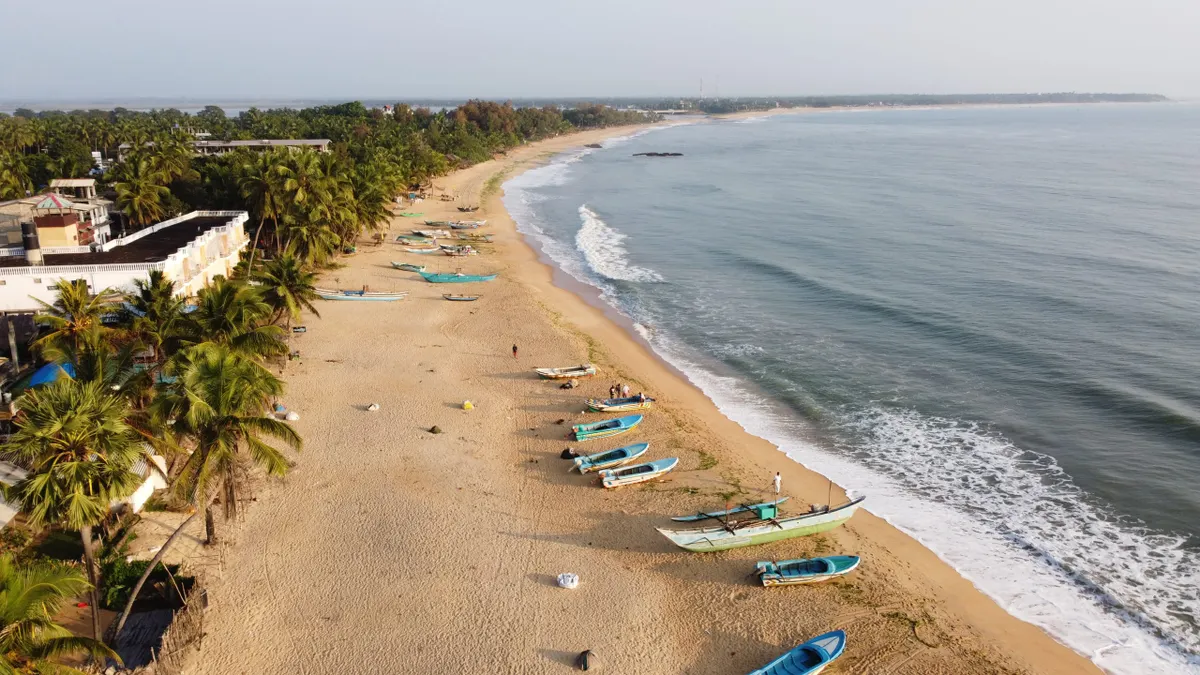
East Coast
Arugam Bay
Arugam Bay is Sri Lanka’s surf capital and one of the world’s great surf towns — a crescent of golden sand on the wild east coast where a legendary right-hand point break peels for hundreds of metres. Between sessions there are lagoon safaris, wild elephants at dusk, an ancient seaside temple and a barefoot café strip that hums from May to September.
Ask any travelling surfer to name the best wave in the Indian Ocean and the answer, more often than not, is a small fishing village on Sri Lanka’s east coast. Arugam Bay — “A-Bay” to almost everyone who has been — is a single sandy main street strung between coconut palms and the sea, and for a few golden months each year it hosts one of the most consistent, most photogenic right-hand point breaks anywhere on earth. International contests have been held here; magazine covers have been shot here; and yet the town itself remains resolutely, charmingly barefoot.
But here is the secret the surf press rarely mentions: you don’t need to surf to fall for Arugam Bay. The village sits on the edge of one of the wildest corners of Sri Lanka, where lagoons thick with crocodiles and waterbirds meet dry-zone jungle roamed by elephants. You can ride your first wave in the morning, drift past mangroves in a fisherman’s canoe in the afternoon, and watch a wild tusker cross the road at dusk — all within a few kilometres of your hammock.
The waves — from Main Point to Peanut Farm
The jewel is Main Point, at the southern end of the bay — a long, walling right-hander that breaks over sand-covered rock and, on its best days, offers rides of several hundred metres. It is a wave with genuine world-class pedigree, yet it is friendlier than its reputation: on smaller swells, confident intermediates can share the shoulder with the pros.
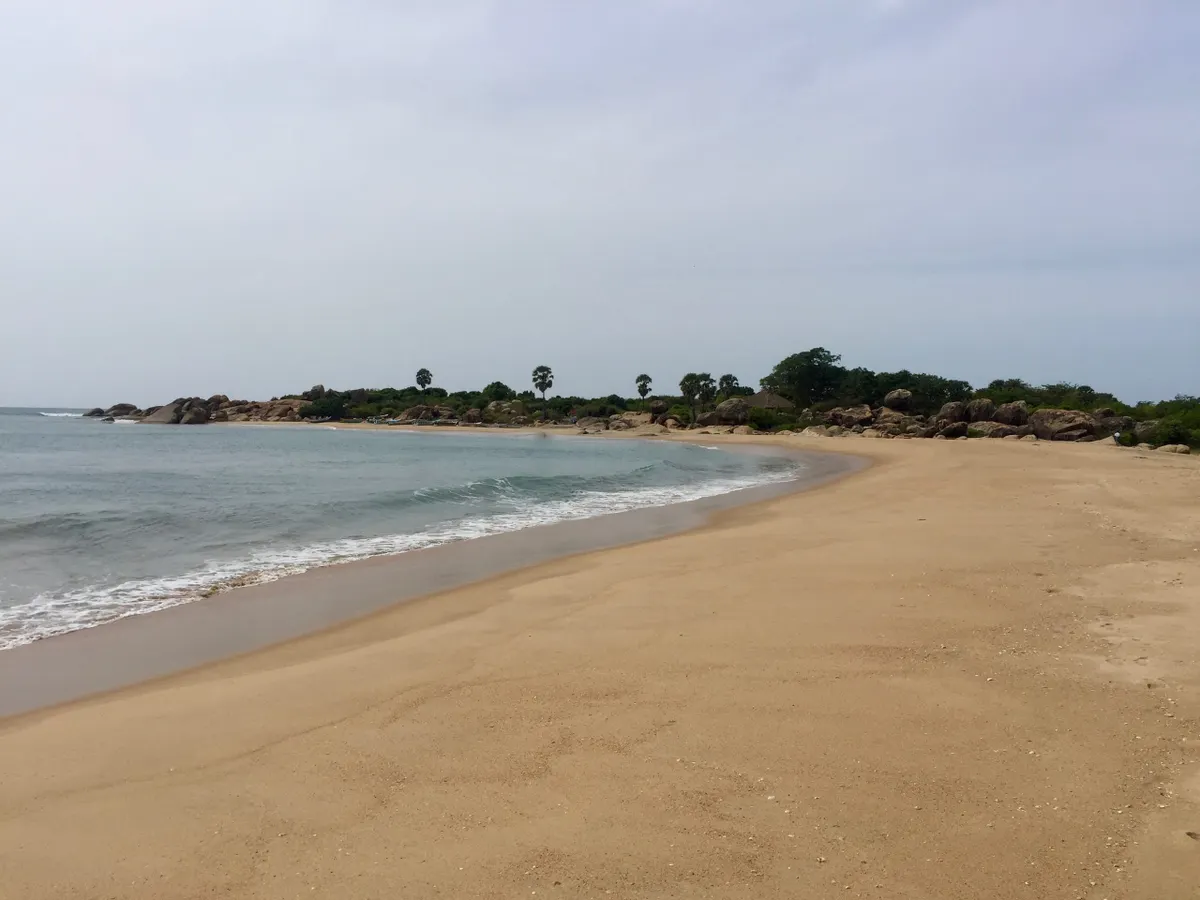
Beginners are even better served. A short tuk-tuk ride north, Whiskey Point serves up soft, forgiving rollers over sand with a beach café right on the point, while Peanut Farm, hidden down a jungle track to the south, has two breaks — a mellow inside wave for learners and a punchier outer peak — framed by rock outcrops and empty beach. Further afield, Elephant Rock and Pottuvil Point round out a coastline where you can surf a different wave every day for a week. Board rental and surf schools line the main street, and lessons here are among the best-value anywhere in Asia.
The season is everything. The east coast sits in the rain shadow of the southwest monsoon, so while the west and south are wet, Arugam Bay basks — May to September is prime time, with clean swell, offshore mornings and reliable sunshine, tapering into October. From December to February the northeast monsoon brings rain and the village largely hibernates.
Beyond the break — lagoons, elephants and birdlife
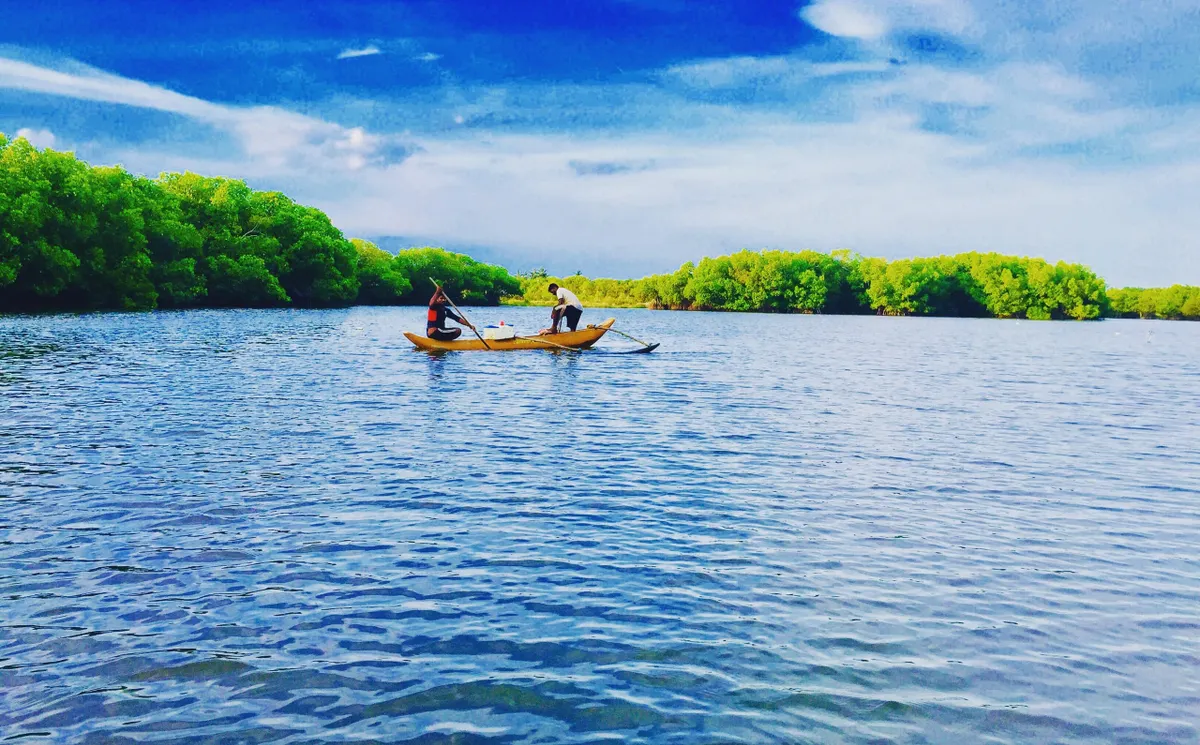
Behind the beach, the land dissolves into a mosaic of lagoons and mangrove channels, and exploring them is the essential non-surf experience. On a Pottuvil Lagoon safari, local fishermen pole you silently through the mangroves in outrigger canoes — past basking crocodiles, monitor lizards, kingfishers and, if your timing is right, elephants wading out to feed in the shallows as the light turns amber. It is a two-hour trip that feels like a National Geographic assignment.
Wildlife lovers should push on to Kumana National Park, about an hour south — the quiet, crowd-free counterpart to Yala on the other side of the Kumbukkan Oya river. Kumana is one of Sri Lanka’s great bird sanctuaries, its famous mangrove-fringed lagoon erupting with nesting pelicans, painted storks, spoonbills and herons in season, with elephants, crocodiles and the occasional leopard thrown in. Even the drive there is a safari: the road south of A-Bay passes waterholes where elephants gather at dusk, and locals will tell you exactly where to park and wait.
A shot of history — Muhudu Maha Viharaya
Arugam Bay’s neighbour Pottuvil hides a genuine surprise: Muhudu Maha Viharaya, a 2,000-year-old Buddhist temple half-swallowed by beach dunes, where weathered standing statues gaze out over the ocean. Legend links the site to Princess Viharamahadevi, said to have come ashore here after being set adrift as a sacrifice to the sea. Visit in the late afternoon, when the low sun ignites the stone and you will likely have the ruins — and the resident monk’s stories — entirely to yourself.
The village — cafés, hammocks and slow evenings
The main strip is Arugam Bay’s social engine: a laid-back parade of surf shacks, juice bars, wood-fired pizza joints and rooftop cafés where the day’s waves are replayed over kottu roti and fresh papaya. Accommodation runs from palm-shaded cabanas to stylish boutique stays, almost all of it seconds from the sand. Evenings are gentle — a beach bonfire here, an acoustic set there — and the whole town keeps surfers’ hours, early to bed and earlier to the point.
Getting there and building it into a route
Arugam Bay is a commitment — around seven to eight hours’ drive from Colombo — and that is precisely what has kept it special. The most rewarding way in is across the island: many travellers descend from Ella and the hill country via the spectacular Wellawaya road, swapping tea fields for dry-zone plains in a single unforgettable afternoon. A-Bay pairs naturally with an east-coast run up to Trincomalee, or with a Kumana or Yala safari on the way back south — our Wildlife Safari 6-day tour shows how neatly the region’s parks link together.
Give it three nights at a minimum. One for the point, one for the lagoon, one because you will not want to leave.
Ready to chase the east-coast season? Browse our tours or ask us to build Arugam Bay into your itinerary.