5 July 2026 · The Ceylon Days Team · 5 min read
Ceylon Tea Country: Estates, Factory Tours and the World's Most Scenic Cuppa
How a coffee blight gave the world Ceylon tea — and how to travel the hill country today: factory tastings, estate bungalows, misty Horton Plains mornings, and the choice between Nuwara Eliya, Ella and quiet Haputale.
On this page
The tea you drank this morning may well have started life on a Sri Lankan hillside, plucked by hand at 1,800 metres before the mist burned off. The island's central highlands are one of the great tea landscapes of the world — a rumpled green quilt of estates, waterfalls and colonial-era factories that you can walk through, sleep in and, best of all, taste your way across.
What makes tea country such a rewarding stop is that it is not a museum. The industry that began here in the 1860s is still very much alive: the same funicular logic of terraced slopes, the same withering lofts and rolling machines, the same 6 a.m. lines of pluckers moving through the bushes. Give it two or three days between Kandy and the south coast and it will likely be the stretch of your trip you talk about most.
From coffee blight to Ceylon tea
Sri Lanka was a coffee island first. Through the mid-1800s, British planters stripped the highland forests for coffee estates — until a leaf fungus, the infamous coffee rust, arrived in the late 1860s and wiped the industry out within two decades.
The pivot came from a Scottish planter named James Taylor, who in 1867 planted the island's first commercial tea field at Loolecondera estate, southeast of Kandy. Taylor experimented with rolling and firing leaf on his own verandah, and the results were good enough that ruined coffee planters replanted their land in tea almost wholesale. By the 1890s "Ceylon tea" was a global brand — helped along by a certain Thomas Lipton, who bought estates around Haputale and shipped tea directly to his grocery empire. The name outlived the colony: the country became Sri Lanka in 1972, but the tea, by law and by pride, is still sold as Ceylon.
What actually happens in a tea factory
A factory tour is the single best hour you can spend in the hills, and most working factories around Nuwara Eliya and Ella welcome visitors. The process is surprisingly quick — leaf plucked at dawn can be finished tea by the next morning — and it goes roughly like this:
- Withering. Fresh leaf is spread in long troughs and softened with warm air for several hours, losing about half its moisture.
- Rolling. Machines twist and bruise the withered leaf, breaking cells and releasing the juices that drive oxidation.
- Oxidation. The rolled leaf rests and darkens — this is where black tea gets its colour and briskness.
- Firing. Hot-air drying locks in the flavour.
- Sorting and grading. Sieves separate the leaf by size into the grades you see on packets — whole-leaf Orange Pekoe (OP), the smaller Broken Orange Pekoe (BOP) that dominates Ceylon exports, and finer fannings and dust destined for tea bags. None of it, disappointingly, has anything to do with oranges.
Every tour ends in a tasting room, and it is worth paying attention: high-grown teas from around Nuwara Eliya are light, golden and almost citrusy, while lower elevations toward Ella and the Uva side give maltier, stronger cups. Buy your souvenirs here, at source, rather than at the airport.
Nuwara Eliya, Ella or Haputale?
The three main bases each have a distinct character, and choosing between them shapes your whole hill-country experience.
Nuwara Eliya, at nearly 1,900 metres, is the old colonial hill station — mock-Tudor buildings, a racecourse, rose gardens and genuinely cold nights (pack a fleece). It sits amid the highest-grown, most delicate teas on the island and is the natural base for a Horton Plains excursion. It is more genteel than lively; you come for atmosphere and altitude, not nightlife.
Ella is the backpacker darling: a small town with a big view, framed by Ella Rock and Little Adam's Peak, with cafés, easy hikes and the famous Nine Arch Bridge a short walk away. It is the sociable, walkable choice — and the terminus of the island's most beautiful train ride.
Haputale is the connoisseur's pick. This little ridge-top town gets a fraction of Ella's visitors, yet the scenery is arguably better: on a clear morning you can see all the way to the southern plains. From here you can ride up through Lipton's old Dambatenne estate to Lipton's Seat, the lookout where Sir Thomas is said to have surveyed his empire — go before 9 a.m., because the clouds roll in with impressive punctuality.
If you can, sleep at least one night on an estate. Converted planters' bungalows — stone fireplaces, claw-foot tubs, tea served on the lawn — are one of Sri Lanka's most memorable stays, and walking out of your door straight into the bushes beats any day trip.
A morning on Horton Plains
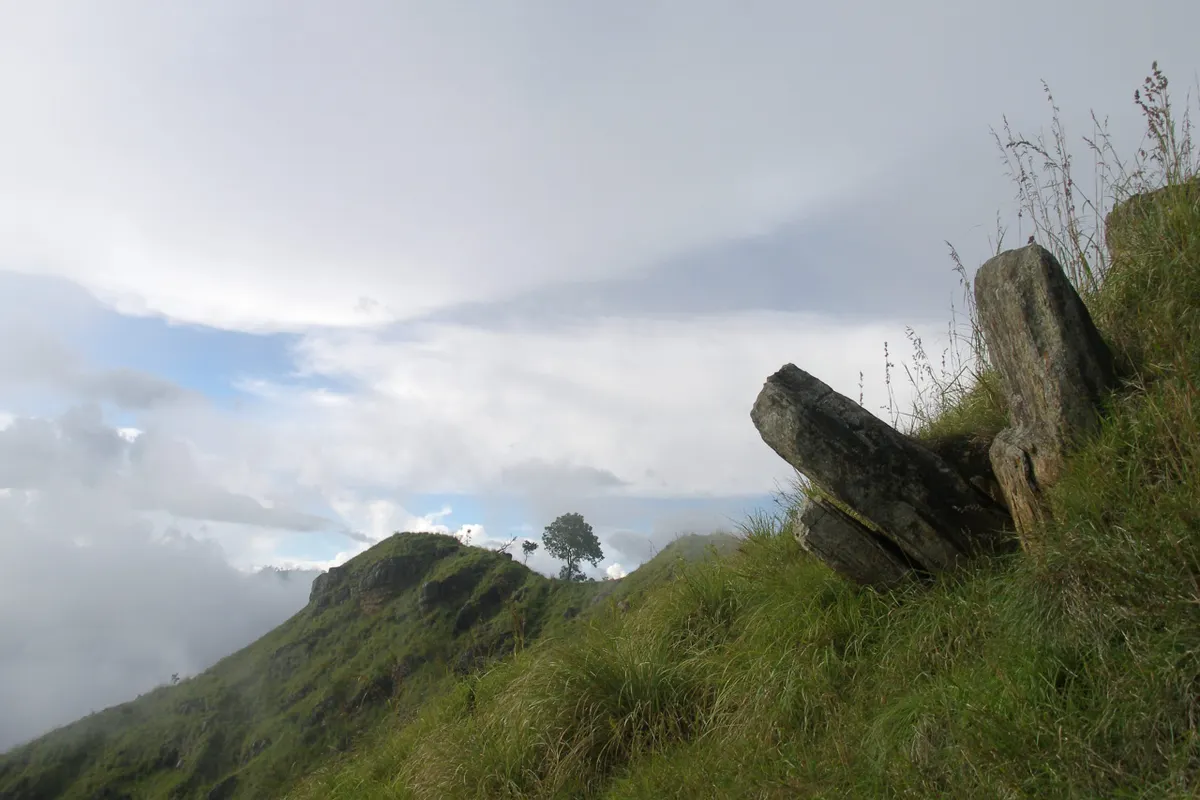
An hour's drive above Nuwara Eliya, Horton Plains National Park is a windswept plateau of cloud forest and golden grassland that feels nothing like the tropics below. The 9-kilometre loop trail takes in Baker's Falls and World's End, a sheer escarpment dropping the better part of a kilometre. Start by 6 a.m.: the abyss fills with cloud by mid-morning, and the early light on the plains — sambar deer grazing in the mist — is the real prize.
The pluckers' craft
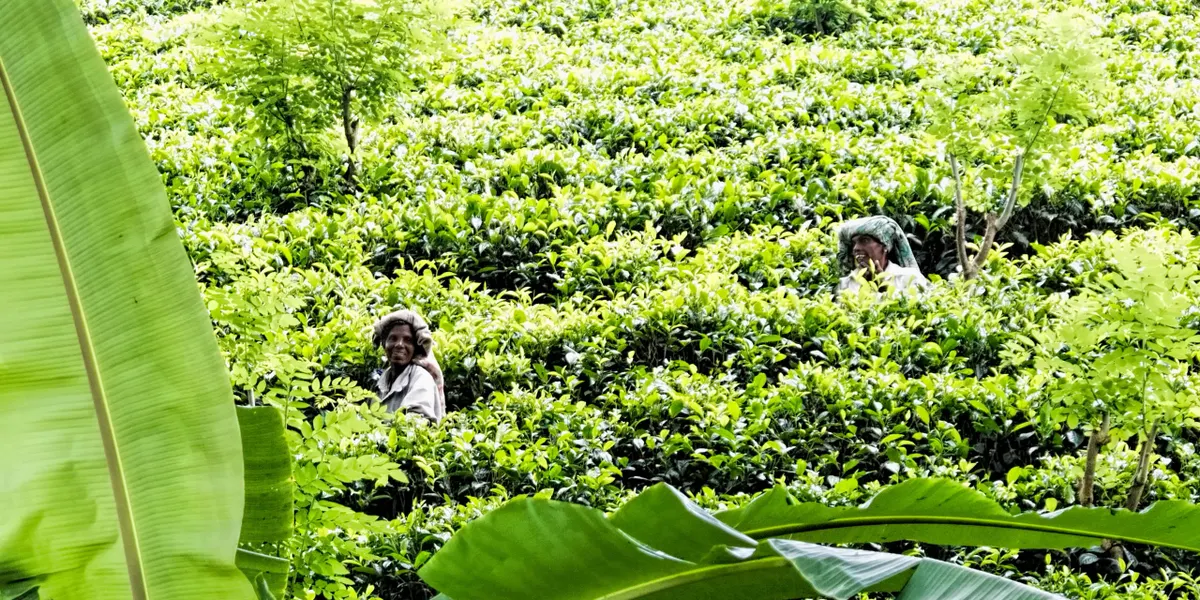
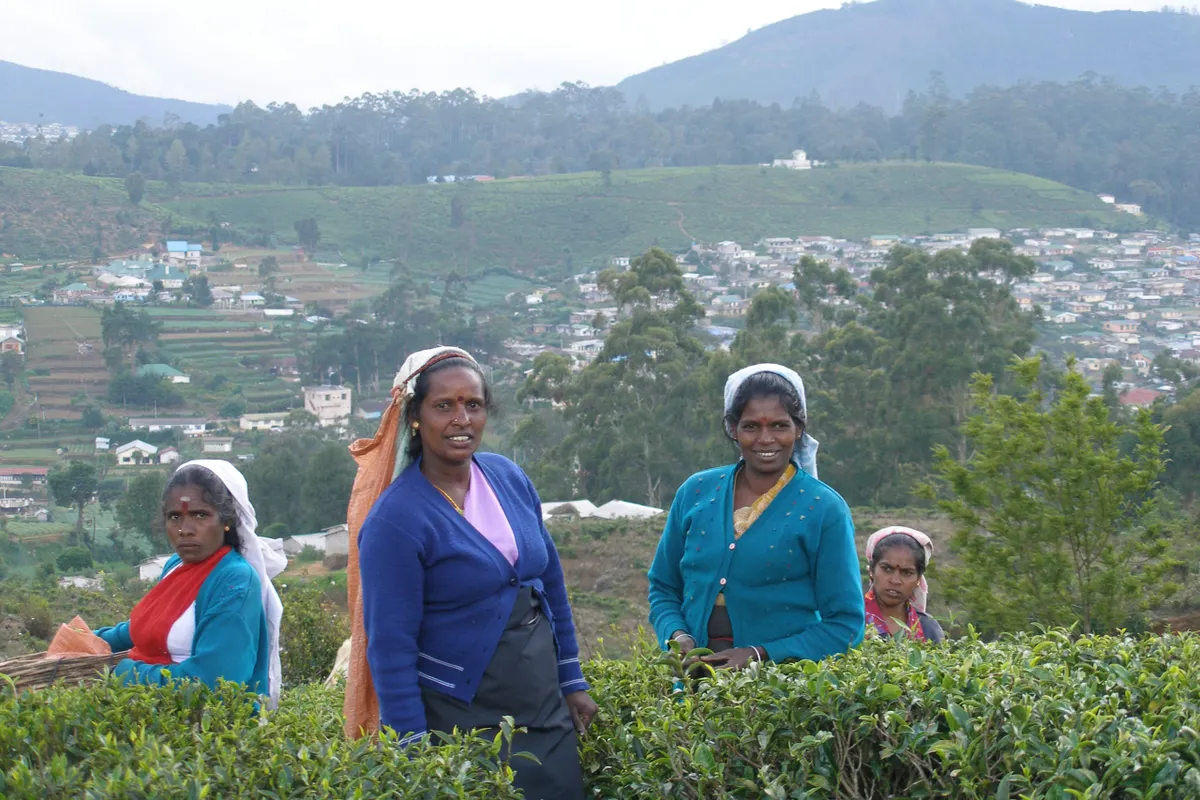
The green precision of the estates depends on skilled hands, overwhelmingly those of Tamil women whose ancestors were brought from South India as estate labour in the nineteenth century. Plucking is exacting work — just the bud and top two leaves, thousands of times a day, a full basket weighed against a daily target. If you stop to watch or photograph, ask first, be generous if someone shows you the technique, and buy tea from factory shops that channel money back into estate communities. The picture-postcard landscape has a human cost, and travelling it thoughtfully matters.
Putting it together
Tea country slots naturally into the classic loop: culture in Kandy, then the slow, spectacular rail climb through the estates — read our full guide to the Kandy to Ella train before you book seats — a couple of nights in the hills, and onward down to the beaches or the safari parks. Our Hill Country Escape covers the essentials in four unhurried days, with a factory tasting and a Horton Plains dawn built in.
However you shape it, don't rush this region. The hills reward slow travel: a second pot of estate-fresh BOP on a cold verandah is worth more than another tick on the itinerary. If you'd like help weaving tea country into a longer route, talk to us — we plan these hills for a living.
Keep reading