Südküste
Unawatuna
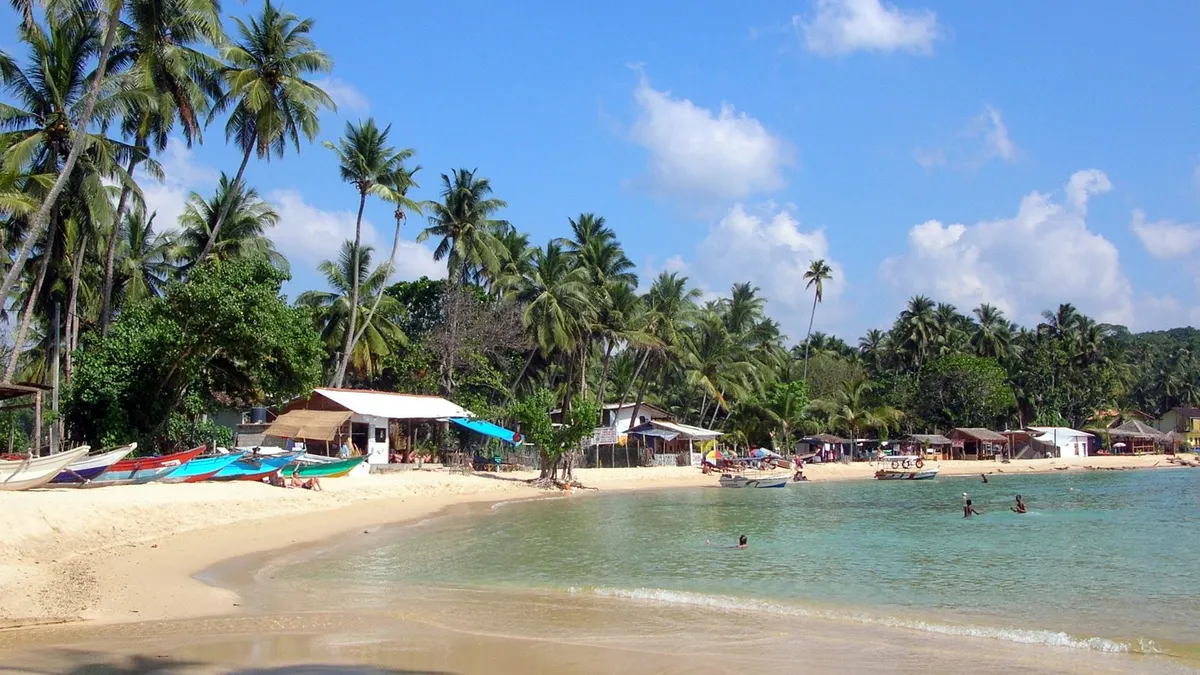
Unawatuna ist die beliebteste Badebucht der Südküste — ein palmengesäumter Halbmond aus ruhigem, riffgeschütztem Wasser, nur wenige Minuten vom Galle Fort entfernt. Schwimmen Sie das ganze Jahr über sicher im geschützten Flachwasser, steigen Sie zur weißen Japanischen Friedenspagode hinauf, entdecken Sie die versteckte Bucht Jungle Beach — und lassen Sie den Tag mit frischen Meeresfrüchten an einem Tisch im Sand ausklingen, wenn die Lampions angehen.
Every coastline has one beach that simply works, and on Sri Lanka’s south coast that beach is Unawatuna. A neat crescent of golden sand cupped between two headlands, its water tamed by an offshore reef, Una — as everyone ends up calling it — is where you come to actually swim. While much of the southern shore deals in dramatic surf and strong currents, this bay stays calm, clear and shallow enough that families wade out fifty metres and are still only waist-deep. Add a fringe of leaning coconut palms, a strip of sand-floored restaurants and the glow of Galle Fort ten minutes up the road, and you have one of the most complete little beach towns in Asia.
Legend gives the place an origin story worthy of its setting. Unawatuna sits at the foot of Rumassala, a forested hill that Hindu tradition identifies as a fragment of the Himalayas — dropped here by the monkey god Hanuman, who was carrying a mountain of medicinal herbs (including the life-restoring sanjeevani) to heal a wounded prince in the epic Ramayana. Botanists note, with a smile, that the hill really does harbour an unusual concentration of rare and medicinal plants.
The bay — swimming, snorkelling and slow days
The rhythm of Unawatuna is set by the water. Mornings are glassy and gold; this is the time to swim the length of the bay or paddle out over the reef. Snorkelling is easy and rewarding straight off the beach at the western end, where corals and reef fish gather in a few metres of water, and several long-established dive schools run trips to deeper reefs and a scattering of wrecks offshore — Unawatuna and neighbouring Galle have some of the island’s best-organised diving, with courses for absolute beginners.
The December to April season brings the bay to its sparkling best — dry skies, flat sea, visibility at its peak — though the reef keeps the swimming gentler than most south-coast beaches even in the greener months.
The Peace Pagoda and Jungle Beach
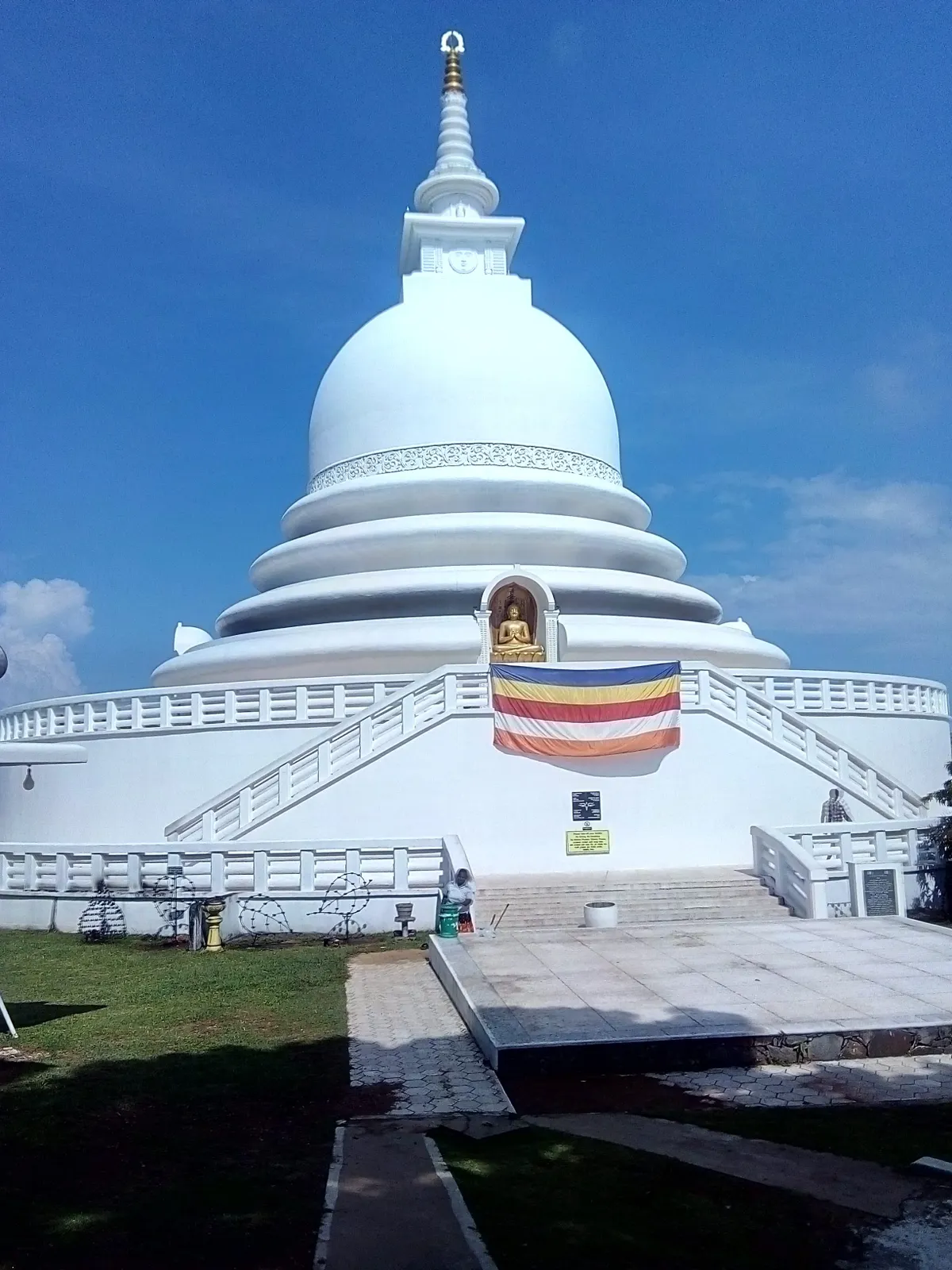
The essential Unawatuna excursion is the walk over the headland. A path climbs from the western end of the bay through Rumassala’s forest to the Japanese Peace Pagoda, a brilliant-white dome built by Buddhist monks of the Nipponzan-Myōhōji order as one of a chain of pagodas promoting world peace. The terrace looks clean over the Indian Ocean to the ramparts and lighthouse of Galle — come for late afternoon, when the whitewash turns rose-gold and the sea fills with returning fishing boats.
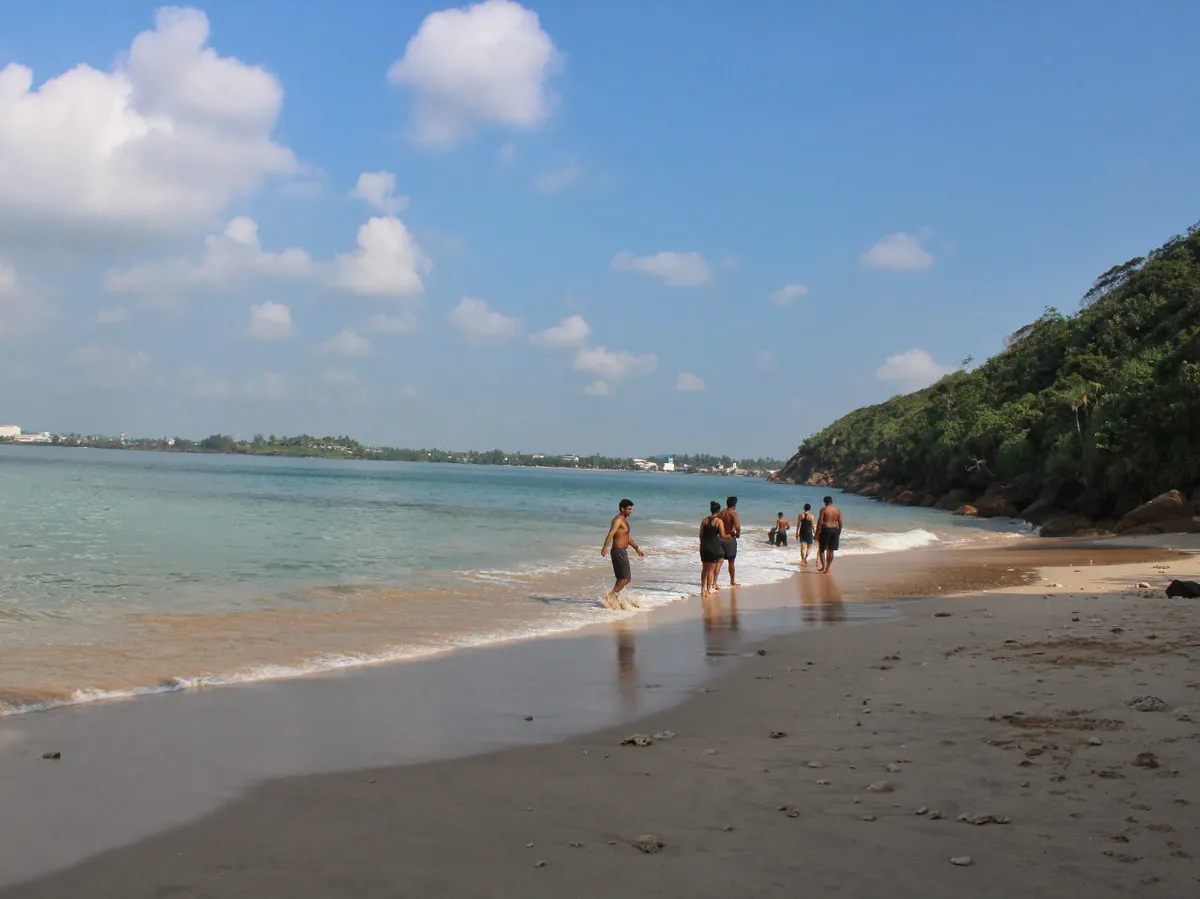
Just beyond the pagoda, a steep path drops to Jungle Beach — a pocket-sized double cove of jade water and pale sand walled in by forest. It is no longer the secret it once was, but arrive in the morning and you may still share it with nothing but hermit crabs and a passing troop of monkeys. The snorkelling off its rocks is some of the best in the area, and the swim-out is short and sheltered.
Galle Fort on your doorstep
Unawatuna’s trump card is its neighbour. Ten minutes by tuk-tuk brings you to Galle — the perfectly preserved 17th-century Dutch fort town whose ramparts, lighthouse and boutique-filled lanes share a single square kilometre. Many travellers do it the smart way round: stay at the beach, and dip into the fort for rampart walks at sunset, gallery browsing and long café lunches. You get the atmosphere of one of Asia’s great colonial towns and the swimming of one of its friendliest bays, without ever packing a bag.
Evenings on the sand
As the light fades, Unawatuna’s restaurant shacks pull their tables onto the beach, light their lanterns and lay out the day’s catch on ice — pick your fish, choose your spice level, and dinner arrives with your toes still in the sand. The nightlife is convivial rather than wild: beach bars with live music, the odd full-moon party, cocktails timed to the sunset. Behind the beach, Wella Devale road has evolved into a genuinely good eating street, from rooftop Sri Lankan kitchens to smoothie-bowl cafés, and yoga shalas and spas fill the mornings for the non-divers.
Making it part of a bigger route
Unawatuna is the natural hinge of any southern itinerary. Galle is next door; the whale-watching boats and surf beaches of Mirissa are under an hour east; and the resort strand of Bentota breaks up the drive back towards Colombo. Our Southern Beaches 5-day tour threads them all together, and Una also makes a superb final stop after the hills and the Cultural Triangle — a few days of warm water and easy evenings before the flight home.
It is not undiscovered, and it does not pretend to be. What Unawatuna offers instead is rarer: a beautiful bay that is genuinely easy — easy to swim, easy to reach, easy to love.
Ready for calm water and fort-town evenings? Browse our tours or plan your south coast escape with us.