Südküste
Udawalawe National Park
Wenn Sie in Sri Lanka ganz sicher wilde Elefanten sehen möchten, ist dies der richtige Park. Udawalawes offene, savannenartige Ebenen rund um einen großen Stausee beherbergen das ganze Jahr über ansässige Herden — Sichtungen aus erstaunlicher Nähe sind fast garantiert, dazu Büffel, Krokodile und eine großartige Vogelwelt. Günstig zwischen Bergland und Südküste gelegen, ist Udawalawe die unkomplizierteste Weltklasse-Safari der Insel.
Some safaris are a lottery. Udawalawe is a promise. This compact national park in Sri Lanka’s southern lowlands is built around a vast reservoir and the grasslands that ring it, and its resident population of several hundred wild elephants doesn’t migrate away with the seasons — they’re here, visibly and reliably, every single day of the year. It is often said that only the great parks of East Africa rival Udawalawe for the sheer dependability of its elephant watching, and few visitors leave without a memory of a matriarch leading her calves across the track a jeep-length away.
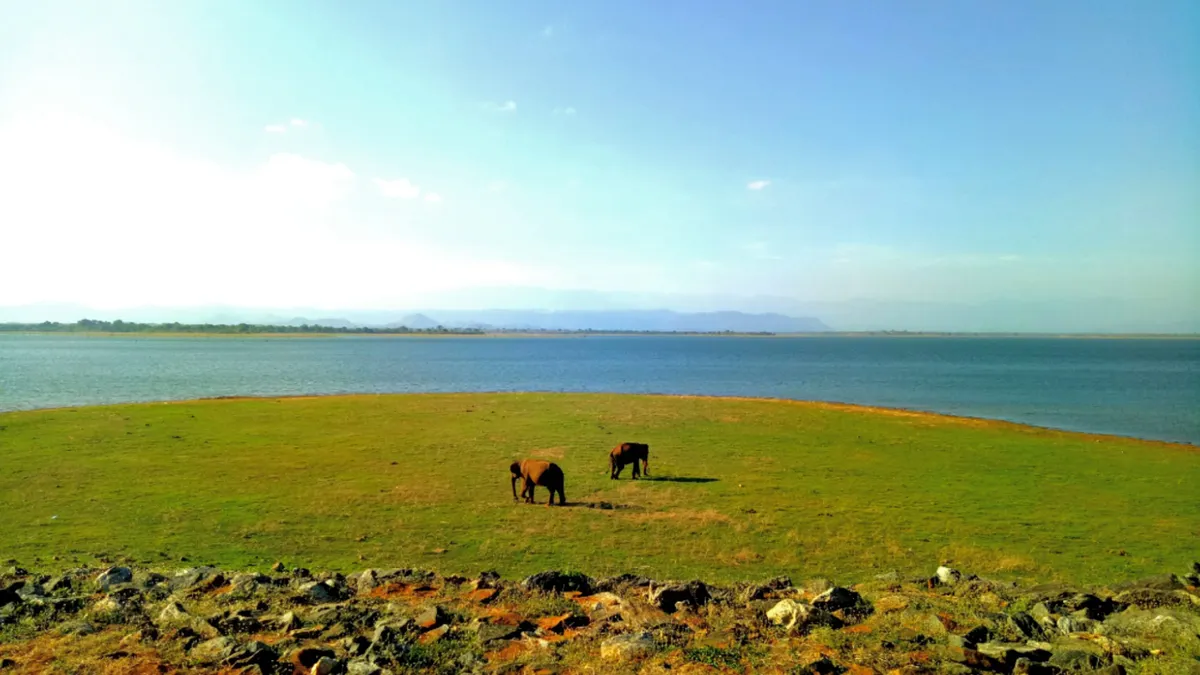
The setting seals the deal. Where much of Sri Lanka’s wildlife hides in dense scrub, Udawalawe’s terrain is open — sweeping plains of tall grass, scattered trees and dead-still water with the wall of the hill country rising blue on the northern horizon. Sightlines run for hundreds of metres, light floods the landscape, and photography here is as good as it gets on the island.
The elephants
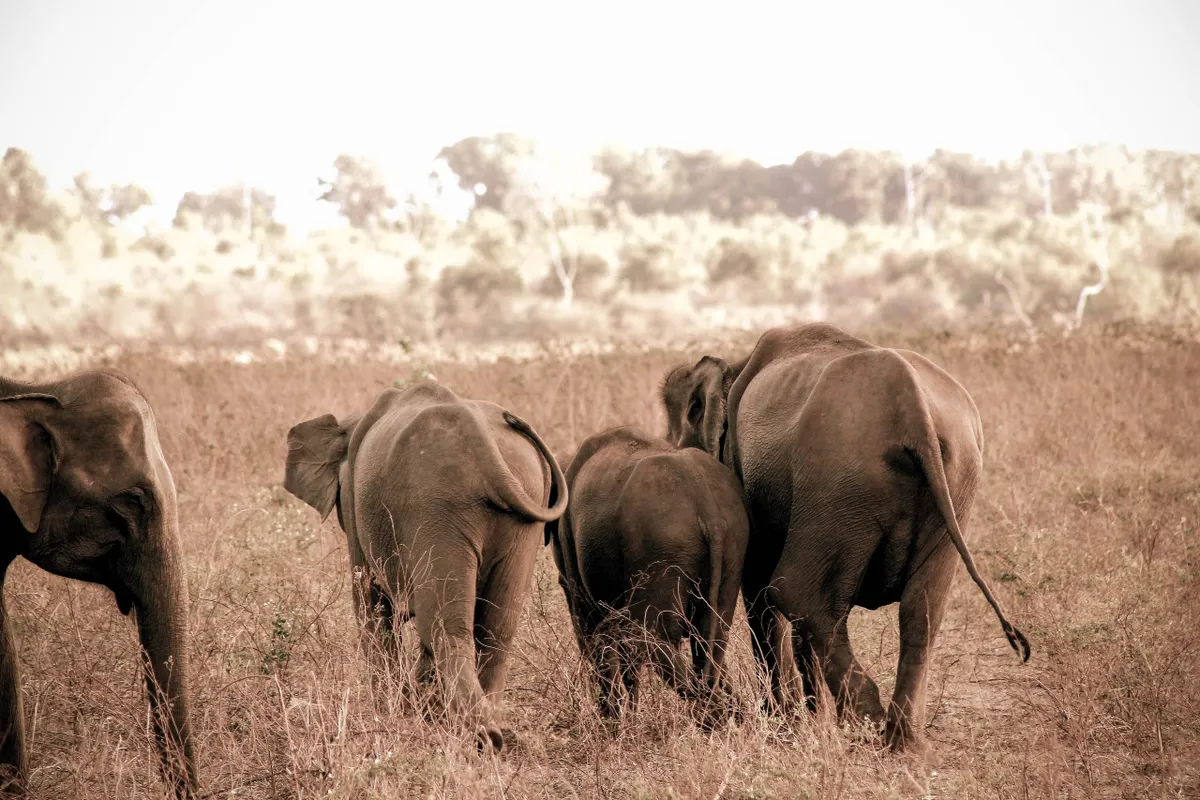
Udawalawe’s herds are the stars, and they perform daily: breeding groups grazing shoulder-deep in guinea grass, adolescents sparring in the shallows, tiny calves hurrying on oversized feet beneath their mothers. Because the elephants have grown up around respectful jeep traffic, they carry on with breakfast, bath time and family politics at remarkably close range — no straining through binoculars required. Morning and late-afternoon drives catch them at their most active, often heading to and from the water.
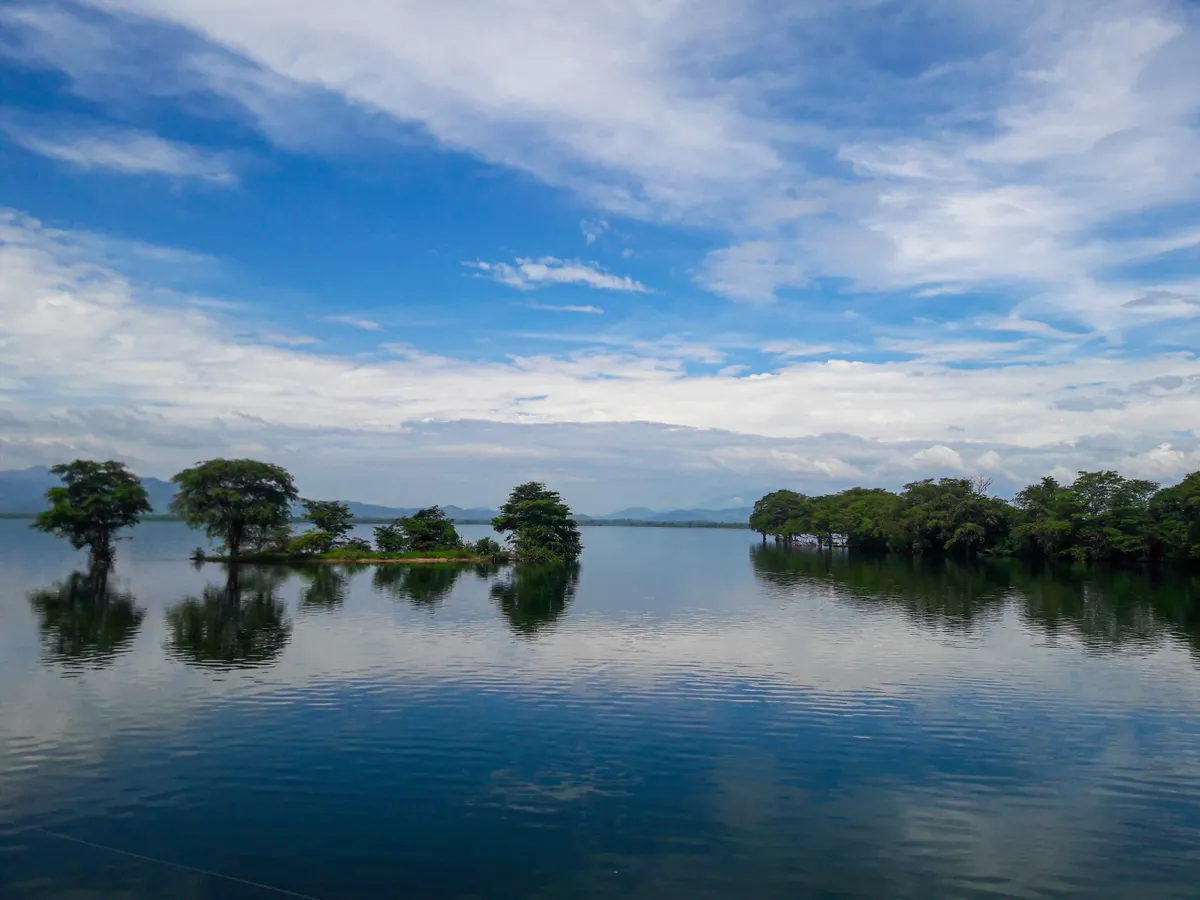
The reservoir itself — the great Udawalawe tank that gives the park its reason for being — anchors the whole ecosystem. Herds of water buffalo wallow along its margins, mugger crocodiles bask on the banks, and the drowned trees standing skeletal in the water make hunting perches for kingfishers and cormorants. Around them, keep watch for sambar and spotted deer, jackals, mongooses, monitor lizards and — for the very lucky — a fleeting leopard.
Birdlife is a quiet highlight. The open country suits raptors superbly — crested serpent eagles, white-bellied sea eagles, changeable hawk-eagles and hovering kestrels — while peacocks display along the tracks, bee-eaters hawk from the wires and painted storks stalk the shallows. Even committed mammal-watchers find themselves reaching for the bird book here.
The Elephant Transit Home
Just outside the park boundary, the Elephant Transit Home cares for orphaned wild calves with a single goal: returning them to the wild. Unlike attractions where elephants are handled and ridden, contact with humans here is kept to an absolute minimum — visitors watch the youngsters charge in for their milk feeds from a viewing platform at scheduled feeding times, and every entry fee helps fund the programme. Well over a hundred rehabilitated elephants have already been released back into Udawalawe and other parks, many now raising wild calves of their own. It’s a genuinely heartening conservation story, and the perfect companion to a park safari.
Getting there and where it fits
Udawalawe’s location is a route-planner’s gift. The park sits at the foot of the hill country, roughly two to three hours from Ella and the tea estates, and about the same from the beaches of the south coast — which means it slots almost effortlessly into the classic descent from the highlands to the sea. Safari in the morning, toes in the Indian Ocean by sunset. From Colombo, count on around four to five hours by road.
Many travellers pair Udawalawe with Yala for a two-park southern circuit: Udawalawe for guaranteed elephants and open-country photography, Yala for the leopard suspense. If your dates fall in September or October, when Yala traditionally closes for the drought, Udawalawe — open year-round — becomes the obvious and excellent alternative.
Best time to visit
There is no bad season for elephants here; the herds are resident and sightings are dependable in every month. The drier stretches — roughly December to March and June to September — offer shorter grass and dustier, more concentrated waterside activity, while the months after rain turn the plains a brilliant green. As everywhere in safari country, timing within the day matters more than timing within the year: book the dawn drive, when the light is golden and the park is at its coolest and busiest with animal traffic, or the late-afternoon session that ends with the sun dropping behind the tank.
Know before you go
Drives run in open 4x4s with a driver-tracker; half-day outings of three to four hours suit most travellers, and staying at one of the lodges or tented camps near the gate makes the early start painless. Bring sun protection, a dust-friendly layer and your longest lens — though here, unusually, even a phone camera goes home full of keepers. Keep voices low around the herds, never encourage your driver to edge closer to a mother with a calf, and give the animals right of way; the elephants of Udawalawe are relaxed precisely because visitors behave.
Ready for near-guaranteed elephants? Udawalawe stars in our 6-day Wildlife Safari — talk to Ceylon Days to build it into your route south.